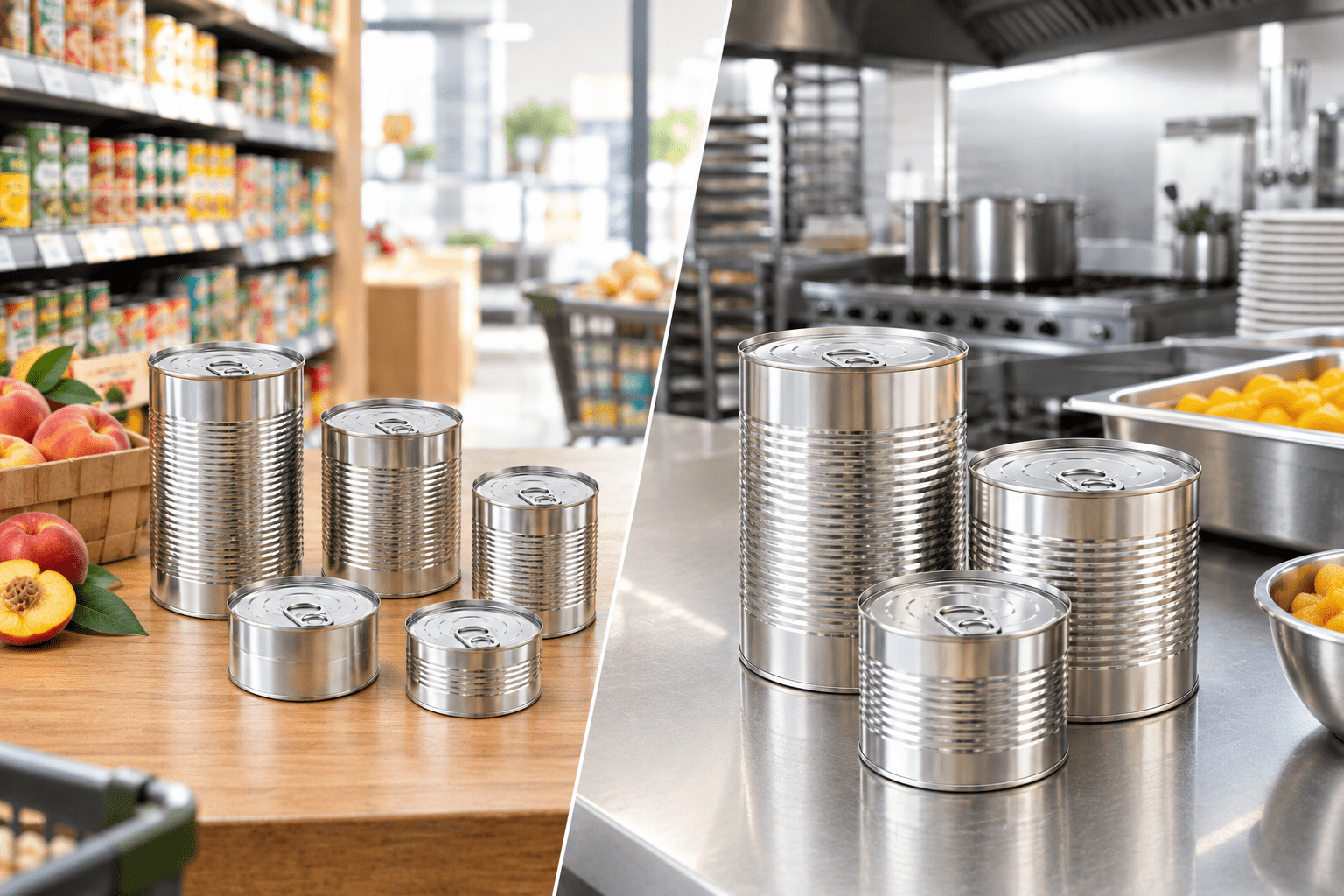


When sourcing canned fruit, buyers often compare products based on can size or net weight. However, these figures do not tell the whole story.
A can labeled 1 kg does not necessarily contain 1 kg of fruit. Part of the weight comes from the packing medium, such as syrup, juice, or water. For food manufacturers, importers, distributors, and private-label buyers, understanding the difference between net weight and drained weight is essential for comparing suppliers, calculating usable fruit yield, and evaluating the real cost of a product.
So, what is the difference between net weight and drained weight? Which one should buyers focus on when comparing canned fruit specifications?
This guide explains what these two measurements mean and how they affect canned fruit purchasing decisions.

What Is Net Weight in Canned Fruit?
Net weight is the total weight of the product inside the unopened can, excluding the weight of the can and other packaging materials.
For canned fruit, net weight generally includes:
Fruit
Syrup
Juice
Water
Other permitted packing media
For example, a canned peach product may have:
Net weight: 1,000 g
Drained weight: 500 g
The 1,000 g represents the total contents of the can, while the 500 g represents the fruit remaining after the packing medium has been drained according to the applicable testing method.
Therefore, net weight alone cannot tell a buyer how much fruit is actually available for use.
What Is Drained Weight?
Drained weight refers to the weight of the solid product remaining after the packing medium has been drained under a specified method.
For canned fruit, the drained portion generally represents the fruit itself, although the exact measurement method and applicable requirements can vary by product and market.
For example:
Net weight: 1,000 g
Drained weight: 500 g
Packing medium: Syrup
In this example, the buyer receives 1,000 g of total contents, but approximately 500 g is the fruit portion measured as drained weight.
Net Weight vs. Drained Weight: What's the Difference?
The simplest way to understand the difference is:
The two figures answer different purchasing questions.
| Buyer Question | Relevant Specification |
|---|---|
| How much total product is in the can? | Net weight |
| How much fruit do I receive? | Drained weight |
| How much syrup/juice/water is included? | Difference between net and drained weight |
| How should I compare fruit yield? | Drained weight |
| How should I compare package size? | Net weight + can dimensions |
| How much usable fruit will my production receive? | Drained weight |
Why Drained Weight Matters to Canned Fruit Buyers
For retail consumers, the difference may not always be a major purchasing factor. For commercial buyers, however, drained weight can directly affect product yield and cost calculations.
Consider two suppliers offering canned peaches:
Supplier A
Net weight: 1,000 g
Drained weight: 500 g
Supplier B
Net weight: 1,000 g
Drained weight: 600 g
At first glance, both products appear to be the same size because both have a 1 kg net weight. But the declared drained weight is different.
For food manufacturers producing fruit desserts, bakery fillings, yogurt toppings, fruit salads, ready-to-eat products, or pastry fillings, the amount of fruit available after draining may be more relevant than the total contents of the can.
How to Calculate Drained Weight Yield
Buyers can use a simple calculation to compare the fruit portion of different products.
For example:
Net weight = 1,000 g
Drained weight = 600 g
600 ÷ 1,000 × 100% = 60%
The product has a 60% drained-weight ratio based on these declared figures.
However, buyers should not use the ratio alone to make a purchasing decision. Product cut, fruit size, packing medium, processing method, market regulations, and agreed specifications can all affect the final product.
Does a Higher Drained Weight Always Mean a Better Product?
Not necessarily.
A higher drained weight may mean a higher proportion of fruit relative to the packing medium, but drained weight by itself does not determine overall product quality.
Buyers should also consider:
Fruit variety
Fruit maturity
Color
Texture
Cut and size
Defect tolerance
Broken pieces
Packing medium
Brix
Acidity
Ingredient declaration
Processing specifications
Packaging format
Shelf life
Food safety requirements
For example, a buyer sourcing canned peach halves may have completely different requirements from a manufacturer buying diced peaches for bakery fillings.
Therefore, drained weight should be evaluated as one part of the complete product specification.
Net Weight, Drained Weight and Can Size Are Not the Same Thing
These three terms are often confused.These three terms are often confused, especially when buyers compare different canned food formats. For more details on how can sizes, net weight, and drained weight work together, see our guide: Canned Vegetables Decoded: Can Sizes, Net Weight & Drained Weight.
1. Can Size
This refers to the physical packaging format or the nominal capacity associated with a particular can specification.
2. Net Weight
This refers to the total contents inside the can, including the fruit and packing medium.
3. Drained Weight
This refers to the weight of the drained solid portion measured according to the specified procedure.
For example, a buyer may request: 1 kg net weight canned peaches, 12 cans per carton.
But that specification alone is incomplete from a procurement perspective. The buyer should also ask: What is the declared drained weight per can?
Why Buyers Should Include Drained Weight in RFQs
When sending an RFQ to canned fruit suppliers, buyers should avoid specifying only “1 kg canned peaches.”
A more complete request could include: Yellow peach halves, 1 kg net weight per can, with the required drained weight, packing medium, can type, and carton configuration.
Depending on the product, buyers may also specify:
Fruit variety
Cut
Grade
Brix
Packing medium
Net weight
Drained weight
Can dimensions
Easy-open or regular lid
Cans per carton
Cartons per pallet
Cartons per container
Private-label requirements
Label specifications
MOQ
Target market
How Net and Drained Weight Affect Canned Fruit Pricing
When comparing quotations, buyers should be careful about comparing price per carton alone.
Imagine two suppliers quote the same price for a carton containing 12 cans.
Supplier A
1,000 g net weight/can
500 g drained weight/can
Supplier B
1,000 g net weight/can
600 g drained weight/can
The carton price may look identical, but the amount of declared drained fruit is different.
This gives the buyer another way to evaluate the quotation based on the fruit portion. For industrial applications, this comparison can be particularly useful when calculating ingredient costs.
Drained Weight Is Especially Important for Food Manufacturers
For food manufacturers, purchasing decisions are often based on cost per usable ingredient, rather than simply cost per can.
For example, a manufacturer using canned peaches in bakery products may need a specific quantity of fruit pieces per production batch.
The purchasing team therefore needs to know:
How much fruit is supplied per can?
How much fruit is supplied per carton?
How many cartons fit into a container?
What is the actual product yield?
What is the cost per kilogram of drained fruit?
This is why a complete canned fruit specification should include both net weight and drained weight.
What Should Canned Fruit Buyers Ask Suppliers?
Before placing an order, buyers can request a complete product specification sheet.
Product
What fruit variety is used?
What is the fruit cut?
What grade is available?
What is the origin of the fruit?
Packing Medium
Is the product packed in syrup, juice, or water?
What is the Brix?
Are there different packing-medium options?
Weight
What is the net weight per can?
What is the drained weight per can?
What is the drained-weight tolerance?
What is the total drained weight per carton?
Packaging
What can sizes are available?
Are easy-open lids available?
How many cans are packed per carton?
What are the carton dimensions?
Logistics
What is the MOQ?
How many cartons fit into a 20-foot container?
What is the loading quantity?
What is the lead time?
Commercial Terms
What is the FOB price?
What is the quotation validity?
What are the payment terms?
Is private-label production available?
Net Weight vs. Drained Weight: A Practical Example
Suppose a buyer is sourcing yellow peach halves.
Required:
Net weight: 1,000 g/can
Packing: Heavy syrup
12 cans/carton
Drained weight: supplier to specify
The buyer receives two quotations.
| Specification | Supplier A | Supplier B |
|---|---|---|
| Net weight/can | 1,000 g | 1,000 g |
| Drained weight/can | 500 g | 600 g |
| Cans/carton | 12 | 12 |
| Drained fruit/carton | 6 kg | 7.2 kg |
Although the can size and net weight are identical, the declared drained weight differs. This is why net weight should not be the only number used when comparing canned fruit suppliers.
What Should Be Included in a Canned Fruit Specification Sheet?
For B2B sourcing, a detailed specification sheet can include:
Product name
Fruit variety
Fruit origin
Crop year
Fruit cut
Grade
Ingredients
Packing medium
Brix
Net weight
Drained weight
Can size
Can material
Lid type
Cans per carton
Carton dimensions
Shelf life
Storage conditions
Microbiological requirements
Chemical/physical specifications
Certification information
The exact specifications required will depend on the product and destination market.
Why Net Weight and Drained Weight Matter When Comparing Suppliers
When sourcing canned fruit internationally, buyers should avoid making a purchasing decision based only on price per carton.
A more meaningful comparison considers:
This approach helps importers and food manufacturers understand what they are actually buying and makes supplier quotations easier to compare.
FAQ: Net Weight and Drained Weight of Canned Fruit
Is drained weight the same as fruit weight?
Not necessarily in every practical sense. Drained weight is a standardized measurement of the solid contents remaining after the packing medium is drained according to the applicable procedure. Buyers should refer to the supplier's specification and the relevant standard for the product and market.
Is net weight more important than drained weight?
They serve different purposes. Net weight describes the total contents, while drained weight provides information about the solid portion. For food manufacturing and ingredient purchasing, drained weight can be particularly useful for comparing fruit yield.
Why can two cans with the same net weight have different drained weights?
The proportion of fruit and packing medium can differ between products. Product specifications, packing medium, and applicable standards can also affect the declared values.
Should drained weight be included in an RFQ?
Yes. For many canned fruit purchases, specifying both net weight and required drained weight can make supplier quotations easier to compare.
How do I compare canned fruit suppliers?
Compare the complete specification rather than price alone. Key factors include fruit quality, cut, grade, packing medium, net weight, drained weight, packaging, MOQ, container loading, certifications, lead time, and commercial terms.
How Countree Food Can Support Your Canned Fruit Sourcing
For international buyers, the right canned fruit specification depends on the intended application, target market, packaging format, and purchasing requirements.
Countree Food supplies canned fruit products in different fruit cuts, packing media, pack sizes, and packaging formats, supporting requirements for retail, foodservice, and food manufacturing applications.
Whether you are sourcing canned peaches, canned apples, canned pears, canned mandarins, or other canned fruit products, clear specifications can help you compare options and select the right format for your market.
Contact Countree Food to discuss your canned fruit specifications.
Get the right net weight, drained weight, and packaging format for your market.
View Canned Fruit Products