

Choosing the wrong cut can mean extra processing, an inconsistent finished product, or higher costs. For private label and bulk canned apple orders, the right format depends on how the apples will be used, the specifications you need, and whether your supplier can repeat them consistently. 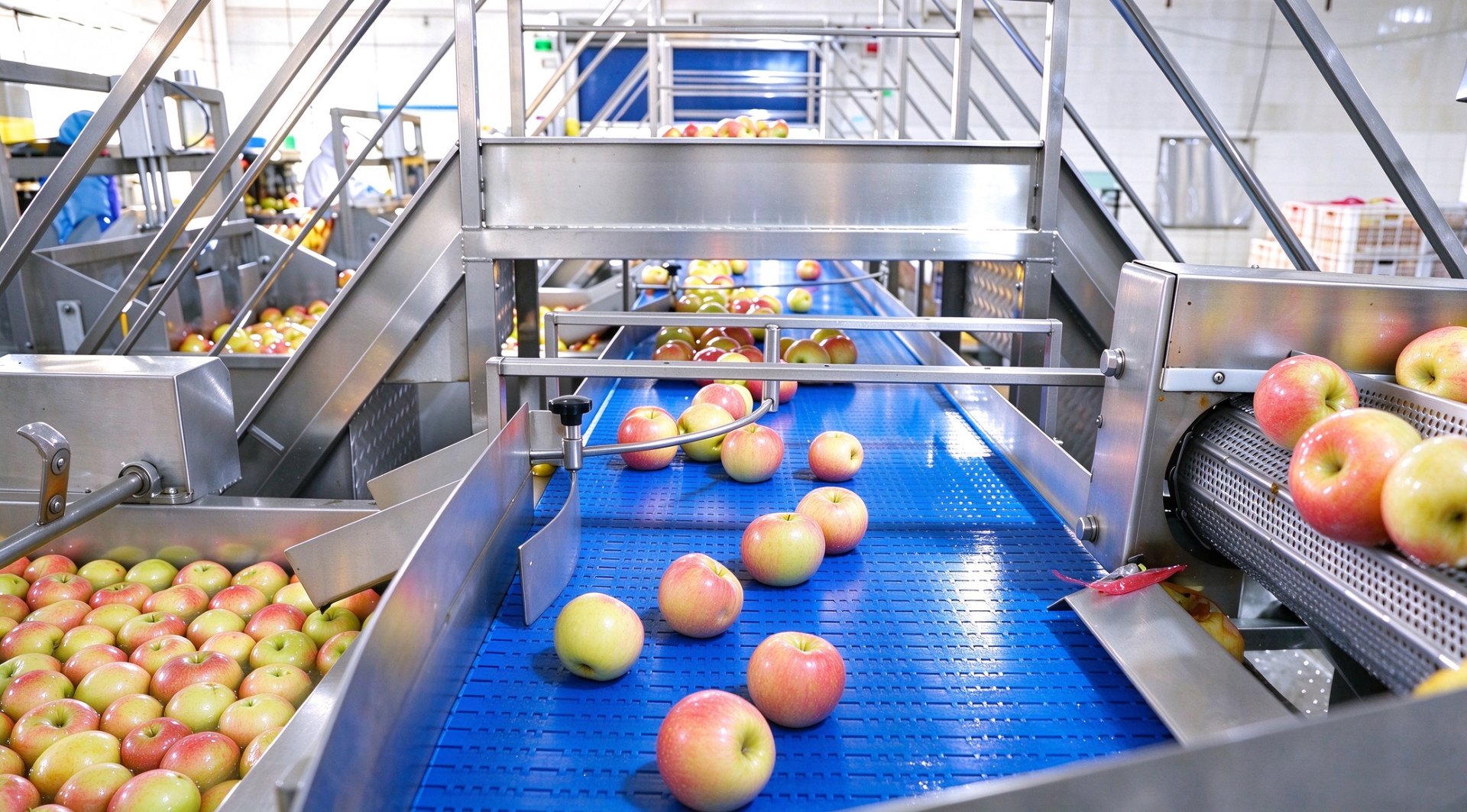
Countryfood Apple Production Line, partial view
1. Choose the Cut Based on Your Application
There is no universally best cut. Start with the finished product and work backward.
| Cut | Typical Applications | What to Check |
|---|---|---|
| Halves | Visible fruit portions, desserts, and retail formats | Fruit size, shape, firmness, and appearance |
| Slices | Pies, bakery fillings, toppings, and portioned products | Slice thickness, breakage, and consistency |
| Dices | Fruit preparations, fillings, and processed foods | Piece dimensions, uniformity, and texture |
If the apples will be further processed, tell the supplier the application—not just the cut you want. A format that looks right in the can may not perform well in your production line.
Different cuts serve different commercial applications. Learn more about different cuts of canned fruit and their applications to understand how fruit size and shape affect product selection.
2. Compare Usable Cost, Not Just Price per Ton
A lower quotation does not always mean a lower production cost. Compare the details that affect usable yield:
Net weight and drained weight
Cut-size consistency and the amount of broken fruit
Texture after storage and during processing
Whether additional sorting or cutting is required
For example, a bakery using canned apple slices should test how well the slices hold their shape in the filling process. Compare quotations based on the same cut, packing medium, weight, and quality requirements.
3. A Good Sample Does Not Guarantee Consistent Orders
For private label products, differences in size, color, texture, or piece integrity can affect the finished product and create complaints or rework. Before placing a bulk order, confirm the specification in writing.
Cut dimensions and acceptable size variation
Color, texture, and appearance requirements
Net weight, drained weight, and packing medium
Packaging format and labeling requirements
How quality will be checked across repeat orders
Keep an approved reference sample where practical, and make sure the supplier understands which characteristics are critical.
4. How to Choose the Right Canned Apple Cut for Your Business
For Private Label Retail Products
Consider apple halves or slices when the fruit itself is an important part of the consumer experience. Halves can offer a more substantial presentation, while slices provide greater versatility across serving occasions and product formats. Your decision should reflect the intended price positioning, pack size, consumer expectations, and the appearance you want to maintain across repeat orders.
For Bakery and Dessert Applications
Apple slices are often a practical starting point when the finished product needs recognizable apple pieces without extensive preparation. Dices may be more suitable when the fruit needs to be distributed evenly through a filling or mixture. The best format depends on the recipe and the required finished texture. A sample should therefore be tested in the actual application, not evaluated only straight from the can.
For Foodservice and Wholesale
Operational convenience becomes especially important when products are used in larger quantities. Compare the preparation required for each cut, the consistency of the fruit, the pack size, and the amount of usable fruit after draining. A product with a lower quoted price may not deliver the lowest cost per usable kilogram if it creates more preparation work or generates more waste.
For Food Manufacturing
Start with the production process and work backward. Determine the required piece size, texture, drained weight, and performance during mixing or heating. Then select the cut and packaging format that meet those requirements. This approach is more reliable than choosing a cut based on general application labels alone.
5. What Private Label and Bulk Buyers Should Confirm Before Ordering
| Item | Details to Confirm |
|---|---|
| Cut | Halves, slices, or dices; target dimensions where applicable |
| Application | Retail, bakery, foodservice, or food manufacturing |
| Packing medium | Syrup, juice, or another agreed medium |
| Weight | Can size, net weight, and drained weight |
| Packaging | Can, jar, pouch, or bulk format |
| Quality | Appearance, texture, tolerances, and inspection criteria |
| Order plan | Estimated volume, delivery schedule, and repeat-order needs |
A clear inquiry helps suppliers quote on the same basis—and makes it easier to identify differences that matter.
6. How to Choose the Right Canned Apple Supplier
A suitable supplier should be able to provide the requested cut, clear product specifications, samples for evaluation, and the documentation required for your market. Just as important, the supplier should be able to maintain the agreed standard across repeat orders.
Before committing to volume, confirm the sample against your application and agree on the key quality parameters in writing.
Choose the Right Cut Before You Scale
For private label and bulk canned apples, choose the cut around the finished application, confirm the specifications, and test samples before placing a large order. Compare quotations only when the product details are equivalent.
Ready to explore premium canned apple solutions?
Partner with Countree Food for consistent quality, the right cut, and reliable supply for your private label or bulk orders.
Learn More About Different Cuts of Canned Apple