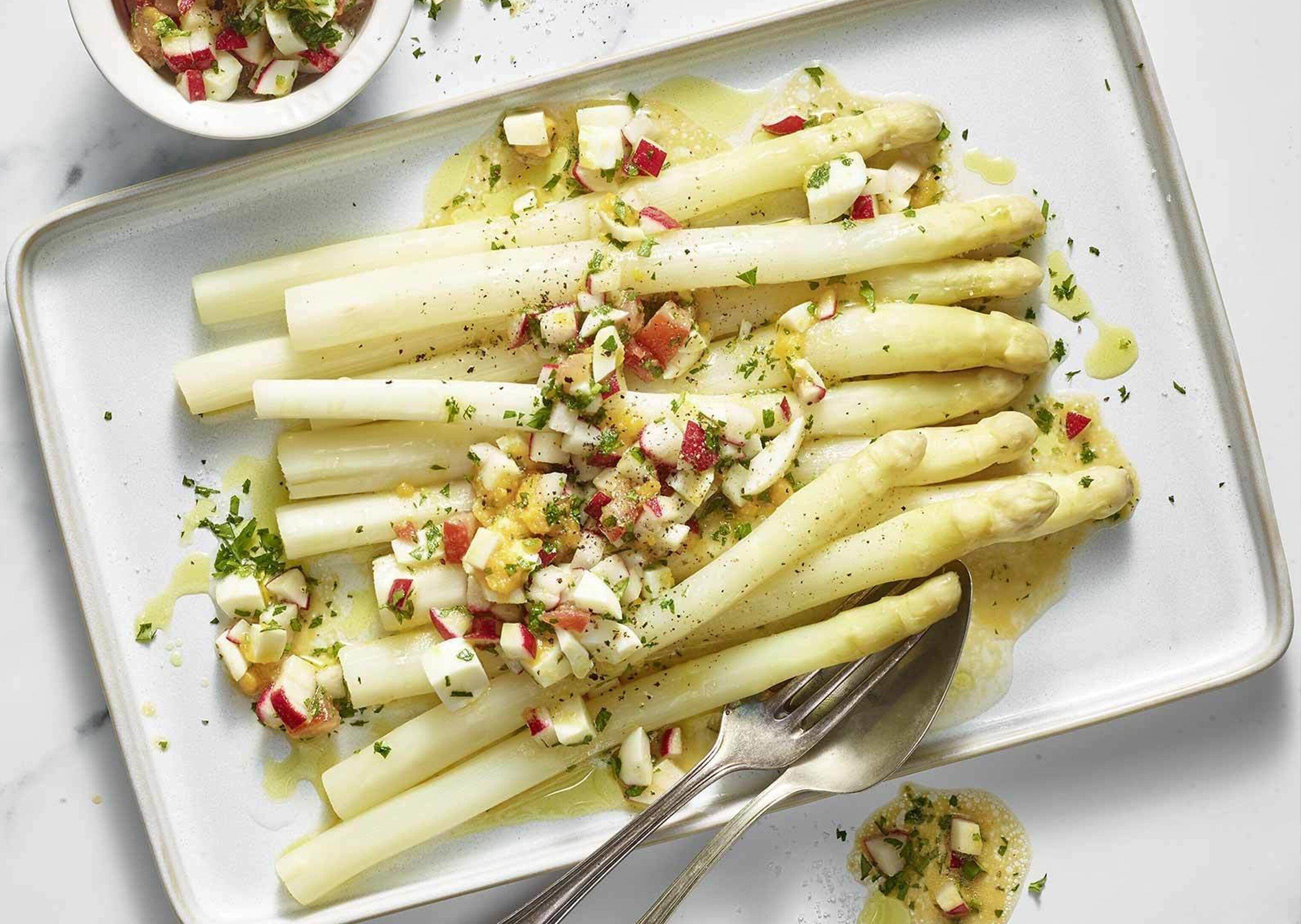


Fresh and canned asparagus can both be useful in the kitchen, but they work best in different situations. The biggest differences are texture, preparation, storage, and how you plan to use them. Fresh asparagus is crisp and firm, while canned asparagus is softer, tender, and ready to use. Neither is automatically better—it depends on the dish.
Canned Asparagus vs. Fresh Asparagus: Quick Comparison
| Canned Asparagus | Fresh Asparagus | |
|---|---|---|
| Texture | Soft and tender | Crisp and firm |
| Taste | Mild and slightly savory | Fresh, vegetal flavor |
| Preparation | Drain and use | Wash, trim, and cook |
| Cooking | Often needs only reheating | Usually requires cooking |
| Shelf Life | Long when unopened | Shorter; needs refrigeration |
| Convenience | Very convenient | Requires more preparation |
| Best For | Soups, pasta, casseroles, eggs | Grilling, roasting, salads, sautéing |
Texture: What’s the Real Difference?
Texture is the biggest difference you’ll notice.
Fresh asparagus is usually firm and crisp, especially when roasted, grilled, or sautéed. It holds its shape well and gives dishes more bite.
Canned asparagus is softer and more tender. Because it has been heat-processed for preservation, it does not have the same crisp texture as fresh asparagus.
That doesn’t make canned asparagus worse. Its softer texture can actually work well in dishes where asparagus is mixed with other ingredients.
Choose fresh if you want: crispness and bite.
Choose canned if you want: tenderness and convenience.
Which One Is Better for Different Dishes?
The best choice depends largely on what you’re cooking.
Grilled Asparagus: Fresh
Fresh asparagus is the better choice for grilling. Its firm texture holds up well over high heat and develops browned, slightly charred edges.
Roasted Asparagus: Fresh
Fresh asparagus works better when you want roasted vegetables with some firmness and browning.
Soup: Canned
Canned asparagus is a convenient option for soups. It is already tender, so you can simply drain it and add it to the recipe.
Pasta: Canned or Fresh
Both can work. Fresh asparagus gives the pasta more texture, while canned asparagus is faster and easier for a quick meal.
Casseroles: Canned
Canned asparagus works particularly well in casseroles because its tender texture blends easily with creamy sauces, cheese, eggs, and other ingredients.
Salads: Fresh
If you want a crisp vegetable element, fresh asparagus is usually the better choice. Canned asparagus can still work, but its softer texture will give the salad a different feel.
Eggs and Omelets: Both
Both options work well with scrambled eggs, omelets, and frittatas. Canned asparagus is especially convenient when you want a quick breakfast without preparing fresh vegetables.
Can You Substitute Canned Asparagus for Fresh?
Yes, in many recipes—but not all.
Canned asparagus can usually replace fresh asparagus in dishes where the vegetable is mixed with other ingredients or cooked until tender.
Good substitutions include:
Soups
Pasta
Casseroles
Quiche
Omelets
Creamy dishes
However, substitution is less ideal when fresh asparagus is the main feature of the dish. For example, if a recipe depends on the crisp texture of grilled or roasted asparagus, canned asparagus will give you a noticeably softer result.
If You’re Substituting Canned for Fresh
A few simple adjustments can help:
Drain it well. Remove excess liquid before adding it to your recipe.
Don’t overcook it. Canned asparagus is already tender, so extended cooking can make it too soft.
Add it later. For many cooked dishes, adding canned asparagus near the end is enough to heat it through.
Adjust the seasoning. Garlic, butter, lemon juice, herbs, and cheese can complement canned asparagus well. For more ideas, see
Canned vs. Fresh: Which Is More Convenient?
This is where canned asparagus has a clear advantage.
Fresh asparagus needs to be:
Washed
Trimmed
Cooked
Used relatively quickly
Canned asparagus only needs to be opened and drained before use. It also has a much longer shelf life when unopened and can be stored in the pantry instead of the refrigerator.
That makes canned asparagus useful when you want to keep a vegetable on hand without planning a meal around it.
So, Which Should You Choose?
There is no single winner.
Choose Fresh Asparagus If You:
Want a crisp, firm texture
Plan to grill or roast it
Want asparagus to be the main feature of the dish
Don’t mind washing and trimming vegetables
Choose Canned Asparagus If You:
Want a quick, ready-to-use ingredient
Prefer a softer, tender texture
Are making soup, pasta, casseroles, or egg dishes
Want a shelf-stable pantry ingredient
Need asparagus available year-round
The Bottom Line
Fresh and canned asparagus simply serve different purposes.
Fresh asparagus is best when texture and roasting or grilling matter. Canned asparagus is best when convenience, storage, and quick preparation matter.
Instead of asking which one is better, ask which one is better for the dish you’re making.
Looking for Canned Asparagus?
From everyday retail packs to foodservice formats, Countree Food supplies canned asparagus in a range of specifications to meet different market and application needs.
Explore Our Canned Asparagus Range →