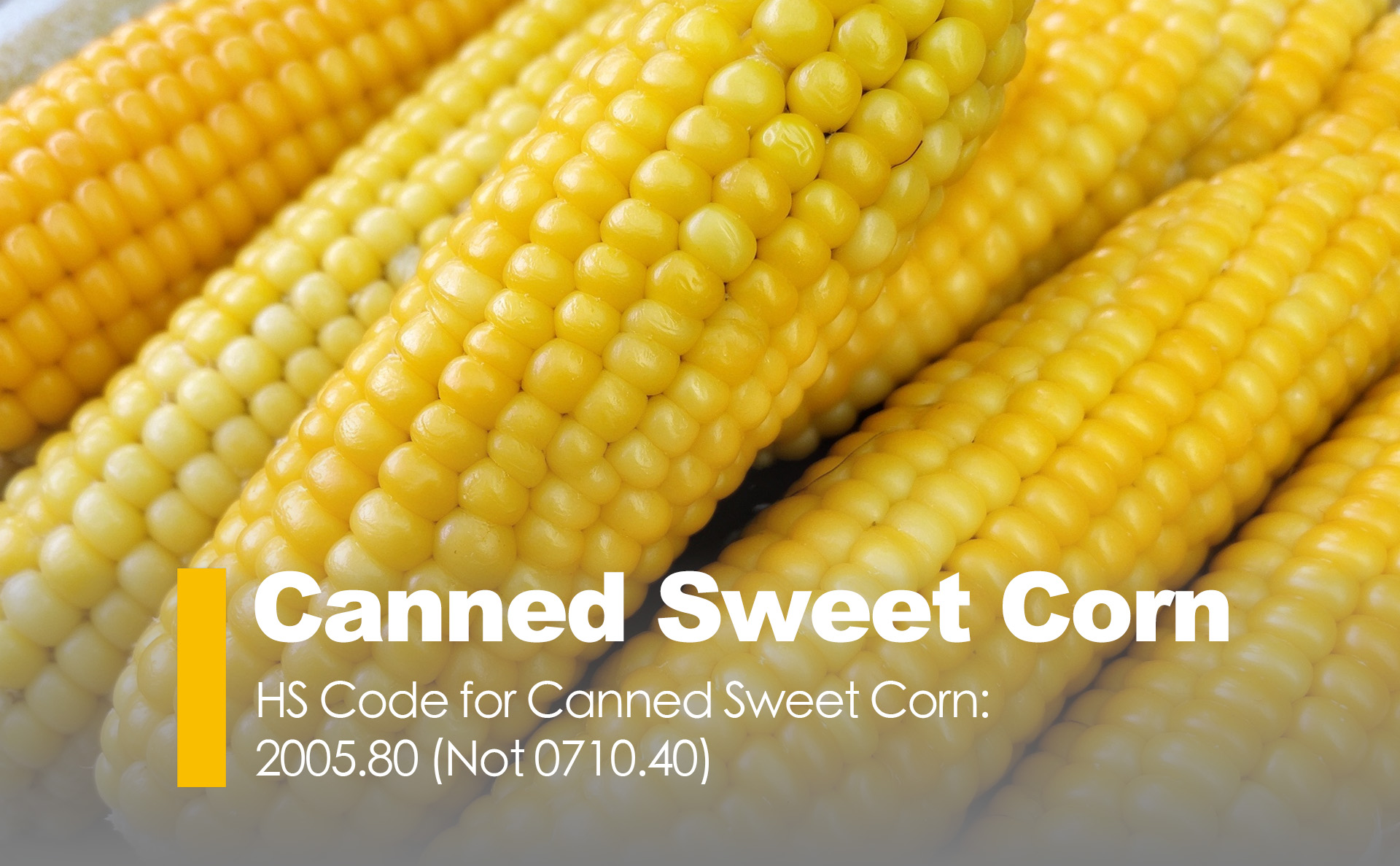


No added sugar does not mean sugar-free — it means the sweetness is the corn's own, bred into super sweet varieties instead of poured into the can. The Brix that matters runs about 14–22 °Bx in the kernels at harvest; the liquid in the finished can usually reads 5–8%, and confusing the two is the most common quoting mistake we see. And no salt added changes the taste, not the safety: a sealed can is preserved by sterilisation, never by salt.
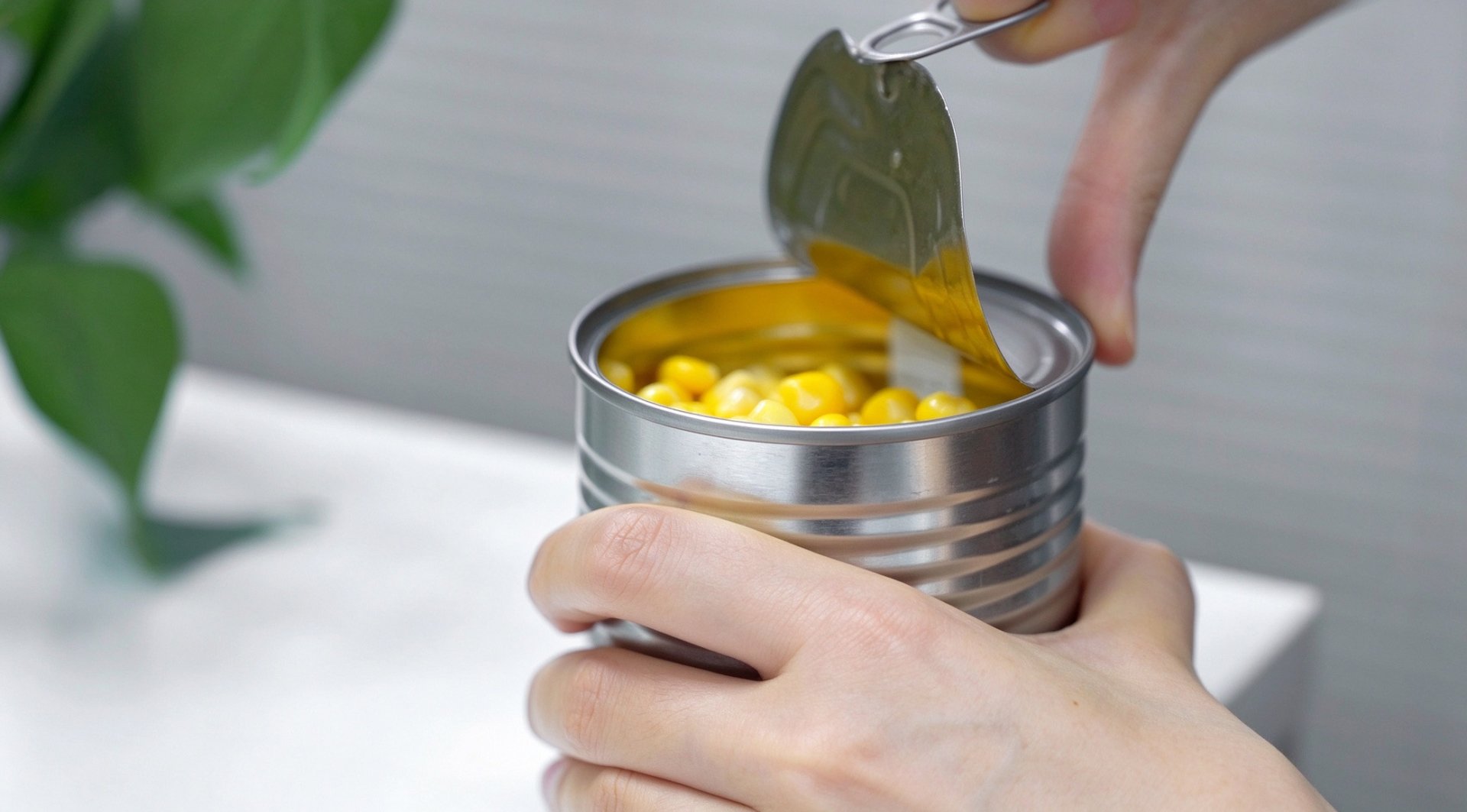
No Added Sugar vs No Salt Added: Two Different Claims
The vaguest word in a corn enquiry is "healthy". We regularly receive RFQs asking for "sugar free, low salt corn" — one phrase that hides three different products and produces three incomparable quotes.
No added sugar means nothing sweet was added during packing. The corn's natural sugars are still there, because they grew there. No salt added means no salt went into the brine. The corn's natural sodium is still there too, in small amounts, so the product is not automatically "sodium free" — that is a separate, stricter claim. And the two claims are independent: a can can carry one, the other, or both, but each has to be specified, produced and labelled on its own terms.
Our advice is blunt: name the claim in your first enquiry, in those words. A buyer who writes "no added sugar, kernel Brix basis, water pack" gets an accurate quote in one round. A buyer who writes "healthy corn" gets whatever each factory guesses they meant — and discovers the difference when the printed cans arrive.
If No Sugar Goes In, Why Is It Sweet?
Because the sweetness was decided in the field, months before the can existed.
Standard sweet corn varieties carry roughly 11–12 °Bx of sugar in the kernels at harvest. Super sweet varieties — the sh2 types — run about 14–22 °Bx. That gap is genetics and harvest timing, not syrup. A factory packing no-added-sugar corn is not removing sweetness from a normal product; it is starting from a sweeter raw material and simply not adding anything on top. When a serious buyer asks us "what is the typical Brix range for your super sweet corn without added sugar?", this is the number they are fishing for — and it is the right question.
It is also where quotes go dishonest without anyone lying. There are two Brix figures in this industry and they share one name. The first is the kernel Brix above, measured on the corn itself. The second is the finished-product Brix — the soluble solids of the liquid in the sealed can, diluted by the packing water — which is what most listings print, commonly 5–8%. A supplier quoting "Brix 7" and one quoting "Brix 16" may be selling nearly identical corn measured two different ways. So write three things into the spec: which Brix you mean, the target range, and the tolerance. Without the basis, the number is decoration.
Taking the Salt Out: What Actually Changes
Here is the fact that settles most reformulation arguments: salt in canned corn is there for flavour, not preservation. What makes the can shelf-stable is retort sterilisation — heat, applied after sealing. Salt can therefore be reduced or removed entirely without touching food safety or shelf life. The can keeps exactly as long as the salted version next to it.
What does change is taste, and it changes more than buyers expect. Salt suppresses bitterness and lifts perceived sweetness; remove it, and the corn's own Brix has to carry the whole flavour alone. A no-salt-added product packed from standard corn tastes flat. The same product packed from high-Brix super sweet corn tastes like corn. This is why we tell buyers reformulating for a sodium target to re-approve samples on Brix and salt together, never one at a time — approving a salt reduction against an old Brix spec is how a good product quietly becomes a bland one.
For a number to benchmark against: a regular retail pack on a UK supermarket shelf lists salt at 0.40 g per 100 g. A no-salt-added specification should not just say "salt: none" — it should state the resulting sodium per 100 g, because that is the figure your label, and your regulator, will use.
No Added Sugar and No Salt Added Label Claims: The US and EU Rules
This is the section that saves a reprint. Both claims are regulated wording, not marketing adjectives, and the rules differ by market.
United States
"No sugar added" is governed by FDA rule 21 CFR 101.60(c): it can only be used where no sugar or sweetening ingredient was added during processing, and unless the food qualifies as low or reduced calorie, the label must carry a disclaimer saying so. The Nutrition Facts panel makes the same point numerically — "Added Sugars" is a declared line, and a genuine no-added-sugar corn shows 0 g there. "No salt added" sits under the sodium-claim rules (21 CFR 101.61): salt was not added in processing, but unless the product also meets the sodium-free threshold, the pack must state that it is not a sodium-free food. Buyers are often surprised that both sentences are mandatory; printers are never surprised, because they charge for the second run.
European Union
Regulation (EC) No 1924/2006 ties "no added sugars" to a condition and a sentence: no added sugars or sweetening ingredients, and — because corn is naturally sweet — the pack must state "CONTAINS NATURALLY OCCURRING SUGARS". Sodium claims run on per-100 g thresholds: "low sodium/salt" means no more than 0.12 g sodium per 100 g, and "sodium-free" no more than 0.005 g. The practical lesson across both systems is identical: decide the claim before the artwork, because the claim dictates the words, and the words are not negotiable afterwards.
The No Added Sugar / No Salt Added Specification Checklist
Most no-added-sugar enquiries take three email rounds to pin down. They could take one. This is the checklist, in the order a factory reads it:
Claim(s): no added sugar / no salt added / both — written as claims, not adjectives
Variety and Brix: super sweet (sh2); kernel or finished-product basis; target range ± tolerance
Packing medium: water; added sugar: none; added salt: none, with target sodium per 100 g
Format and sizes: the can or pouch sizes for your channel, each with its drained weight
Shelf life and season: required shelf life, and the packing season you are buying into
Certifications: the food-safety certificates your market requires
Send that, and the reply you get is a spec sheet and a sample offer instead of a list of questions.
Questions Buyers Ask Us
What is the typical Brix range for super sweet corn without added sugar?
On the kernels at harvest, roughly 14–22 °Bx for super sweet (sh2) varieties, against 11–12 °Bx for standard sweet corn. In the finished can, the liquid commonly reads 5–8%. Both are "the Brix" — which is why your spec has to say which one you are buying on.
Is "no added sugar" the same as sugar-free?
No. The sugars in the corn are natural and remain — typically several grams per serving. "Sugar-free" is a different claim with its own threshold, and sweet corn does not meet it. Any supplier who offers you "sugar-free sweet corn" is telling you something about their paperwork, not their corn.
Does no-salt-added corn keep as long as regular canned corn?
Yes. Preservation comes from sterilisation after sealing, not from salt, so removing salt does not shorten shelf life. It only changes the flavour — which is why the Brix has to be high enough to carry it.
Can one private-label SKU be both no added sugar and no salt added?
Yes. The two claims are independent lines on the specification and independent statements on the label. Plenty of retail clean-label ranges run both on the same can — provided the variety is sweet enough that nobody misses what was taken out.
Buying for a clean-label range?
Send us your claim, your sizes and your target market — we will reply with the specification sheet and samples, not more questions.
View Our Complete Product Range