


Walk down the canned fruit aisle and you’ll notice that fruit can be packed in more than one way. Some peaches are packed in syrup, while others come in fruit juice or water. The same goes for pears, pineapple, apricots, mandarin oranges, and other popular canned fruits. The packing liquid affects more than just sweetness — it can change the flavor, calorie and sugar content, mouthfeel, and even how you might want to use the fruit.
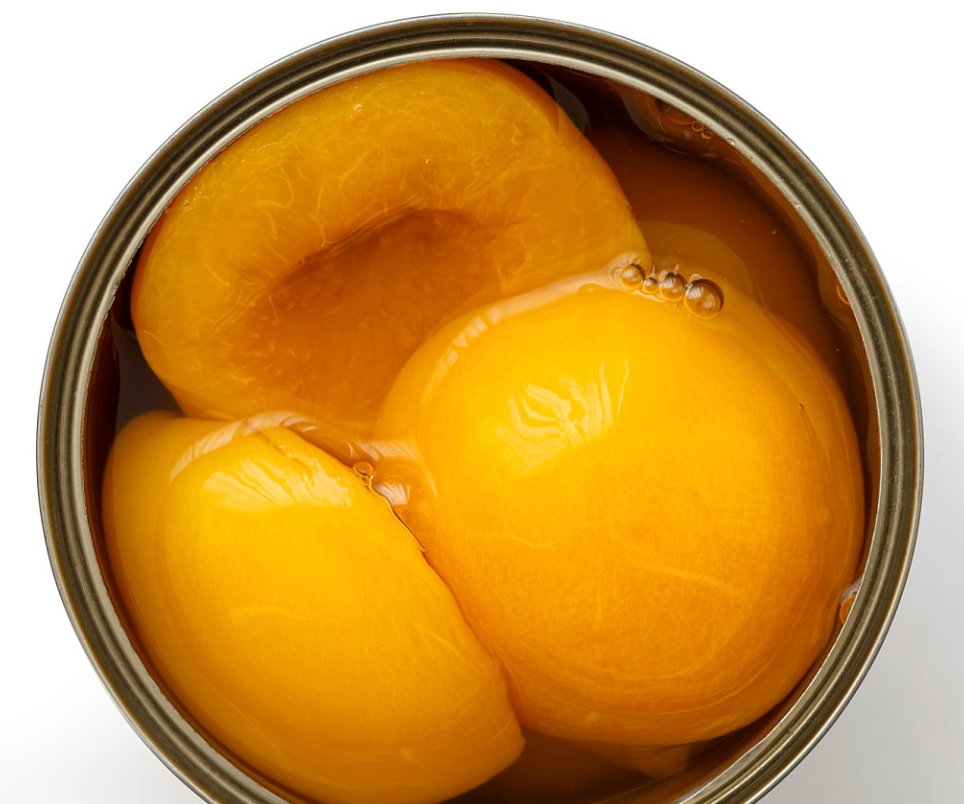
What Is Canned Fruit Packed In?
The liquid surrounding canned fruit is commonly called the packing medium or packing liquid. Its purpose is not simply to fill the can. It also helps protect the fruit and contributes to the finished product’s taste and texture.
The three options you’re most likely to encounter are syrup, fruit juice, and water.
Canned Fruit in Syrup
Canned fruit in syrup is packed in a sweetened liquid, typically made with water and sugar. Because of the added sweetness, syrup-packed fruit has a richer, sweeter taste and is often used in desserts, baking, fruit salads, and other applications where sweetness is part of the finished dish.
You may also see terms such as light syrup or heavy syrup on product labels. These indicate differences in the concentration of the syrup. If you are watching your sugar intake, check the Nutrition Facts panel and ingredient list rather than relying on the word “syrup” alone.
Canned Fruit in Juice
Fruit can also be packed in fruit juice, including the fruit’s own juice or another suitable fruit juice. Compared with syrup, juice-packed fruit generally has a more fruit-forward flavor. However, fruit juice naturally contains sugars, so “packed in juice” does not necessarily mean “sugar-free” or “low in sugar.”
Look at both Total Sugars and Added Sugars on the nutrition label to understand what you are buying. Juice-packed peaches, pears, pineapple, and mandarin oranges can work particularly well for breakfast, snacking, salads, and lighter desserts.
Canned Fruit in Water
Water-packed fruit is surrounded primarily by water rather than a sweetened syrup or fruit juice. Because water does not add sugar to the product in the same way that syrup or juice can, the fruit itself tends to be the main flavor.
Water-packed fruit can be a practical choice when you want a less-sweet product or plan to use the fruit in recipes where you don’t want additional sweetness from the packing liquid. As always, check the ingredient list and nutrition panel because formulations can vary between products.
Canned Fruit in Syrup vs. Juice vs. Water: What’s the Difference?
At a glance, the biggest difference is the liquid surrounding the fruit. But that difference can affect several aspects of the finished product.
| Feature | Fruit in Syrup | Fruit in Juice | Fruit in Water |
|---|---|---|---|
| Sweetness | Usually sweeter | Naturally sweet, depending on the juice | Generally less sweet |
| Packing medium | Sweetened syrup | Fruit juice | Water |
| Added sugar | May be present | Depends on the formulation | Generally lower from the packing liquid |
| Flavor | Rich and sweet | More fruit-forward | Lighter and more neutral |
| Typical applications | Desserts, baking, sweet dishes | Breakfast, snacks, salads, desserts | Recipes, salads, lighter applications |
| What to check | Added sugars and ingredients | Juice type and sugar content | Ingredients and nutrition information |
There isn’t one packing medium that works for every situation. The right choice depends on the product formulation, your nutritional preferences, and how you intend to use the fruit.
How Does the Packing Liquid Affect Nutrition?
Sugar and Calories
Syrup generally contains added sugar, which can increase the total sugar and calorie content of the finished product. Fruit juice contains naturally occurring sugars from the juice. Depending on the formulation, there may also be added sugars. Water itself does not contribute sugar, but that does not automatically mean every water-packed fruit product has no sugar — the fruit naturally contains sugar.
That’s why it’s useful to check the nutrition label rather than judging a product solely by its packing medium.
Added Sugar vs. Naturally Occurring Sugar
One of the easiest ways to misunderstand canned fruit nutrition is to treat all sugar as the same. Fruit naturally contains sugar. Added Sugars refer to sugars added during processing or preparation.
When comparing products, look at:
Total Sugars
Added Sugars
Serving Size
Calories
Ingredient List
How Does the Packing Liquid Affect Taste and Texture?
Syrup-Packed Fruit
Syrup gives fruit a noticeably sweeter profile and can create a fuller mouthfeel. That’s one reason syrup-packed peaches, pears, and apricots are often used in cakes, pies, pastries, desserts, fruit cocktails, and sweet sauces.
Juice-Packed Fruit
Fruit packed in juice tends to have a more fruit-forward character. The juice can complement the natural flavor of the fruit without the same level of sweetness associated with a traditional syrup. It works well in breakfast bowls, fruit salads, yogurt, smoothies, and light desserts.
Water-Packed Fruit
Water-packed fruit generally has a lighter taste because the packing liquid contributes little sweetness. This can be useful when you want more control over the final flavor of a recipe. The fruit can be drained and incorporated into salads, savory dishes, or other recipes without adding much sweetness from the packing liquid.
Which Canned Fruit Works Well for Different Uses?
The best choice often depends less on the fruit itself and more on what you plan to do with it.
Breakfast & Snacking
Desserts & Baking
Salads & Light Meals
How to Choose Canned Fruit: 5 Things to Check
1. Check the Packing Liquid
Is the fruit packed in syrup, fruit juice, or water? This gives you an initial idea of the product’s flavor and sweetness.2. Check Added Sugars
Look at the Added Sugars section of the Nutrition Facts panel. Two products that look similar on the shelf can have different nutritional profiles.3. Read the Ingredient List
The ingredient list tells you what is actually in the product — fruit, water, sugar, fruit juice, acidulants, or vitamin C. It is often more informative than front-label marketing claims.4. Consider the Fruit Format
Common formats include halves, slices, chunks, dices, segments, crushed fruit, and puree. Peach halves may be ideal for desserts, while diced peaches work better in yogurt or bakery fillings.5. Think About the Final Application
Ask: What am I going to do with this fruit? Flavor and sweetness matter most for direct eating; texture and consistency matter more for baking; portion size, packaging, and supply reliability matter for foodservice.
What Should Buyers Look for When Sourcing Canned Fruit?
For importers, distributors, retailers, and foodservice companies, choosing canned fruit is a broader sourcing decision.
Fruit Variety — peaches, pears, pineapple, apricots, mandarin oranges, fruit cocktail, apple products, and other processed fruit.
Packing Medium — syrup, fruit juice, water, or customized formulations matched to market and application.
Fruit Format — cut style, size, fruit-to-liquid ratio, net weight, drained weight, appearance, and texture.
Packaging Options — cans, glass jars, cups, pouches, or tubs depending on channel and portion needs.
Private Label & OEM — customization of variety, cut, packing medium, sweetness, portion size, packaging, label design, and specifications.
Syrup vs. Juice vs. Water: Which Should You Choose?
There is no single answer for every canned fruit product. Instead, consider what matters most:
If you want a sweeter, dessert-friendly product: Syrup-packed fruit may fit the application.
If you want a fruit-forward flavor: Fruit packed in juice can be a practical option.
If you prefer a lighter packing medium: Water-packed fruit may be worth considering.
For commercial buyers, the decision should also take into account the target market, product positioning, application, packaging, and cost requirements. The important thing is to look beyond the name of the packing liquid and evaluate the complete product specification.
Frequently Asked Questions
Is canned fruit in syrup less healthy than fruit in juice?
The nutritional difference depends on the specific formulation. Syrup often contains added sugar, while fruit juice contains naturally occurring sugars and may or may not contain added sugar. Check the Nutrition Facts panel and ingredient list to compare products.
Is canned fruit in water better for you?
Water-packed fruit can have less sugar contributed by the packing liquid, but the fruit itself naturally contains sugar. The overall nutritional profile depends on the product.
Does canned fruit in juice contain added sugar?
Not necessarily. Some products may contain only fruit and juice, while others may contain added sweeteners. Check the ingredient list and Added Sugars declaration.
What is the difference between fruit in syrup and fruit in juice?
The main difference is the packing medium. Syrup is a sweetened liquid, while juice is a fruit-based liquid. This can affect sweetness, flavor, sugar content, and the way the fruit is used.
Does canned fruit lose nutrients during processing?
Some nutrients can be affected by processing and storage, while other nutrients and beneficial components remain available. The nutritional value also varies by fruit and processing method.
Can you rinse canned fruit to remove some of the syrup?
Draining and rinsing can remove some of the packing liquid from the surface of the fruit. However, the exact effect on sugar or calories depends on the product and how it is processed.
How do I choose canned fruit for private label?
Start with the target market and application. Then define the fruit variety, cut, packing medium, pack size, packaging format, nutritional requirements, certifications, and other product specifications before selecting a supplier.
Looking for Canned Fruit for Your Brand?
From peaches and pears to pineapple, apricots, and fruit cocktail, the right canned fruit solution depends on more than the fruit itself. For retailers, distributors, foodservice companies, and food manufacturers, factors such as packing medium, fruit format, packaging, specifications, and private-label requirements all play a role.
Countree Food supplies canned and processed fruit products with OEM and private-label options for international markets. If you’re developing a new canned fruit product, start with the application and target market, then build the product specification around them.
Explore Our Canned Fruit Range