

Choosing the right packaging format directly impacts your shelf appeal, freight costs, and target retail channel. For private-label brands and food importers, matching the container to the end consumer's eating occasion drives repeat orders. This guide breaks down the four primary shelf-stable fruit snack formats—4oz cups, 8oz cups, spouted pouches, and jelly cups—to help you plan your next product line.
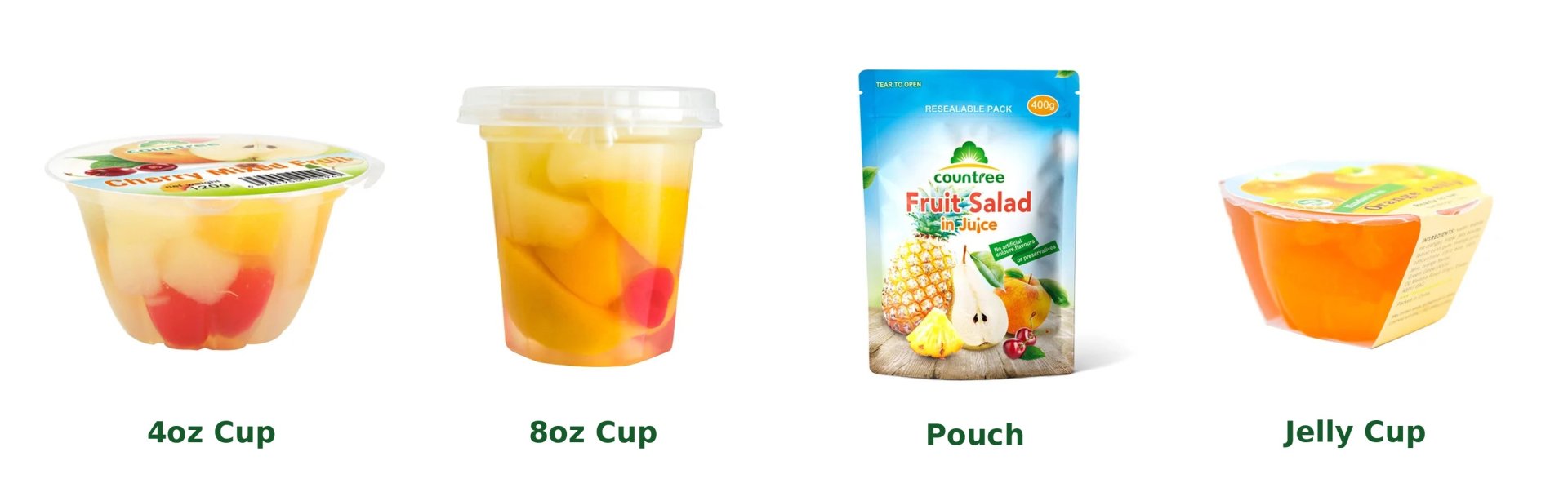
1. 4oz (113g) Standard Fruit Cups
The 4oz cup is the industry standard for single-serve fruit snacks. Retailers typically sell this format in 4-pack or 12-pack cardboard sleeves. It is the most widely accepted size for everyday retail and foodservice programs.
Target Market
Portion & Calorie Control
Retail Shelf Presence
Sourcing Note
2. 8oz (227g) Large-Format Cups
The 8oz cup functions as a substantial snack or light meal replacement. Unlike the multi-pack 4oz format, these are usually sold as individual units and positioned for higher perceived value.
Target Market
Premium Fruit Experience
Margin Advantage
Sourcing Note
3. Spouted Pouches
Originally dominant in baby food, spouted pouches have expanded rapidly into mainstream fruit snacks for both kids and active adults. Their flexibility makes them especially strong in modern distribution channels.
Target Market
Resealable & Spill-Proof
Freight Efficiency
Sourcing Note
4. Jelly Cups
Jelly cups suspend diced fruit, coconut gel (nata de coco), or fruit juice inside a firm plant-based gel matrix (typically carrageenan or konjac). Available from 15g mini-bites to 150g dessert cups, they offer a distinctive dual-texture experience.
Target Market
No Juice Splatter
Shelf Life Advantage
Sourcing Note
5. Side-by-Side Comparison for Buyers
| Specification | 4oz Standard Cup | 8oz Large Cup | Spouted Pouch | Jelly Cup |
|---|---|---|---|---|
| Primary Channel | Supermarkets, Club Stores | Convenience Stores, Grab-and-Go | E-Commerce, Outdoor, Baby/Kids | Specialty Retail, Dessert Aisle |
| Typical Fruit Cut | Diced (10x10mm) or Tidbits | Large Chunks, Slices, Halves | Puree or Micro-Diced (≤6mm) | Diced Fruit + Nata de Coco |
| Packaging Material | High-Barrier PP (EVOH) | Clear PET or High-Barrier PP | Multi-Layer Foil / Recyclable PE | PP Cup + Heat-Seal Film |
| Reclosable? | No | Optional (with Overcap) | Yes (Screw Cap) | No |
| Container Loading | High (Nestable empty cups) | Moderate | Highest (Flat empty pouches) | High |
6. Which Format Fits Your Private-Label Strategy?
Choose 4oz Multi-Packs
If you target mainstream retail chains looking for high-volume, everyday pantry staples.
Choose 8oz Single Cups
If you want to compete in convenience stores with premium, chunky fruit in 100% juice.
Choose Spouted Pouches
If your distribution relies heavily on online fulfillment or targets active, on-the-go families.
Choose Jelly Cups
If you want to differentiate your catalog with trending tropical flavors (mango, lychee, white peach) and lower liquid-spill risks.
Need OEM Specifications or Samples?
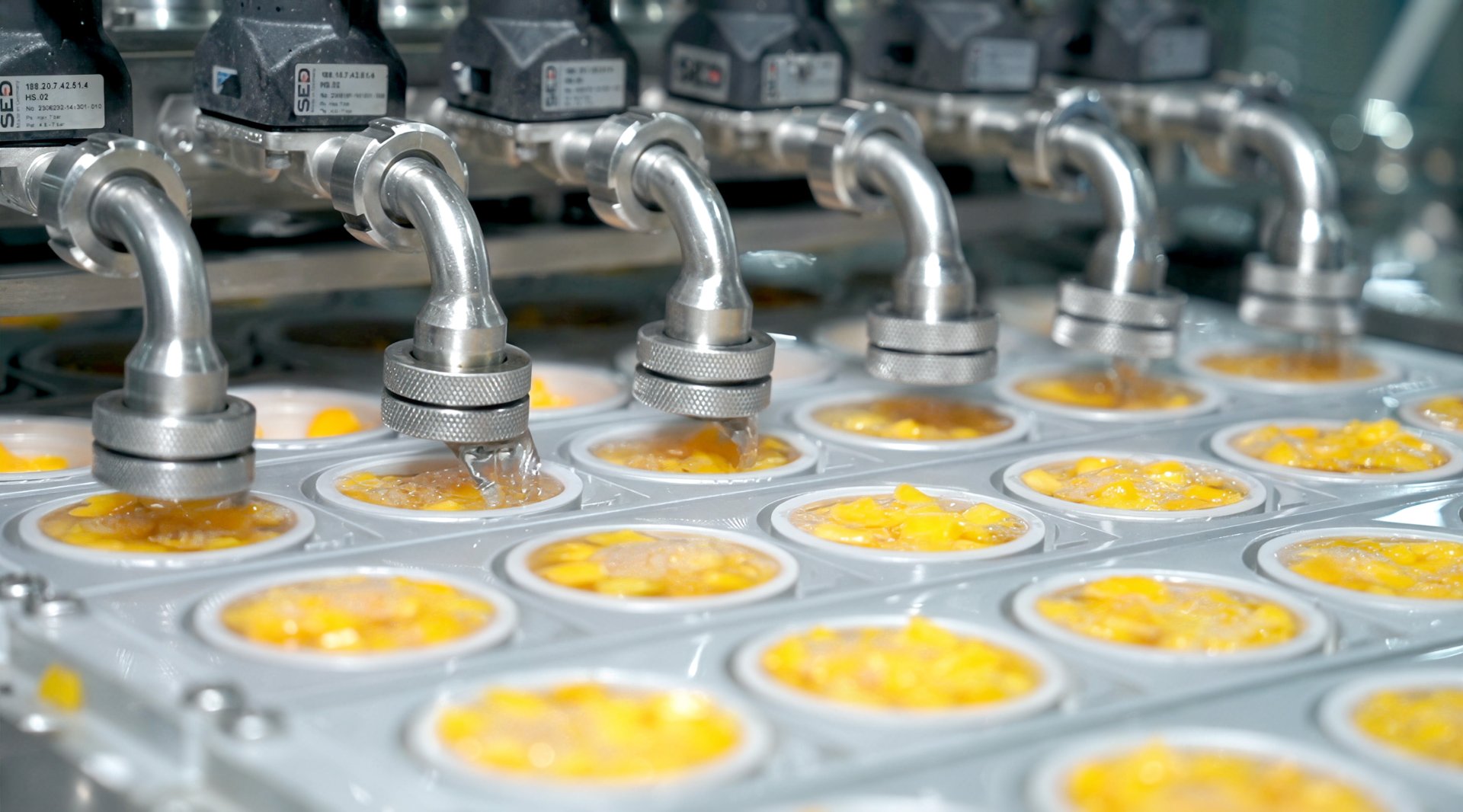
We manufacture shelf-stable fruit cups, pouches, and jelly snacks in BRC- and FDA-certified facilities. Contact our export team to request full specification sheets, Brix/drained weight options, and private-label MOQ details.
Contact Our Export Team