

Canned Sweet Corn vs Frozen vs Fresh: Which Is Best?

Canned Sweet Corn vs Frozen vs Fresh: Which Is Best?

news_banner

Canned Sweet Corn vs Frozen vs Fresh: Which Is Best?

11th September, 2026

Canned Sweet Corn vs Frozen vs Fresh: Taste, Nutrition, Texture & Cost Compared

When a recipe calls for sweet corn, you usually have three choices: canned, frozen, or fresh. Fresh corn can offer excellent flavor and a crisp, juicy texture when it is in season. Frozen corn is convenient and often retains a firm bite. Canned sweet corn is ready to use, shelf-stable, and available throughout the year.

So which one is actually the best? The answer depends on what you value most. If you want peak seasonal flavor, fresh corn may be your favorite. If texture is a priority, frozen or fresh corn can have an advantage. If convenience, storage, and quick preparation matter most, canned sweet corn is hard to beat.

This guide compares canned, frozen, and fresh sweet corn based on taste, texture, convenience, shelf life, nutrition, and cooking uses.
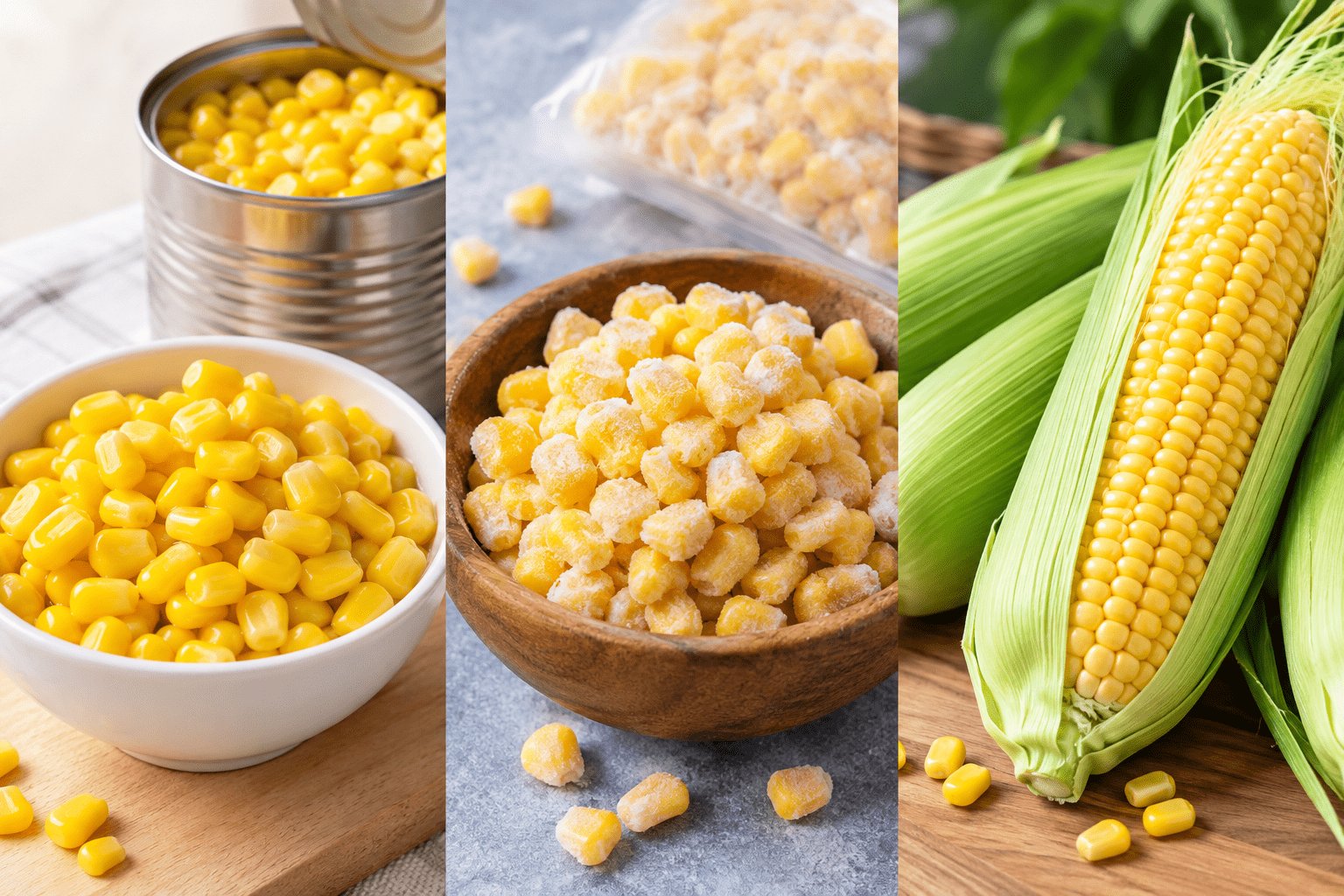
Canned vs Frozen vs Fresh Corn: Quick Comparison

Factor          Canned Sweet Corn           Frozen Sweet Corn            Fresh Sweet Corn
TasteMild, sweet, consistentFresh-tasting, sweetExcellent when very fresh
TextureTenderFirm and crispCrisp and juicy
PreparationReady to useUsually needs cookingRequires preparation
Shelf LifeLong, shelf-stableLong when frozenRelatively short
StoragePantryFreezerRefrigerator
AvailabilityYear-roundYear-roundSeasonal in many regions
Convenience★★★★★★★★★☆★★☆☆☆
Best ForQuick meals, salads, soupsCooking, meal prepBBQ, grilling, seasonal dishes

There is no universal winner. Each type of sweet corn has a different advantage.

Choose canned corn when convenience and shelf life are your priorities.
Choose frozen corn when you want a firm texture with convenient year-round storage.
Choose fresh corn when you want the classic experience of seasonal corn and have time to prepare it.

1. Which Type of Sweet Corn Is Best for Different Uses?

The best type of sweet corn depends on how you plan to use it. Fresh, frozen, and canned corn each have situations where they work particularly well.

                        Use Case               Best Choice                                          Why
Quick everyday mealsCannedReady to use with little preparation
Salads & tacosCannedEasy to add directly to the dish
Soups & stewsCanned or frozenBoth work well in cooked dishes
Fried rice & stir-friesFrozenKernels usually hold their shape well
Pasta & casserolesCanned or frozenEasy to mix with other ingredients
Grilling & roastingFreshBetter suited to cooking on the cob
BBQs & summer mealsFreshGreat for grilling and serving whole
Meal prepFrozenEasy to portion and store
Emergency or pantry mealsCannedShelf-stable and ready when needed

For convenience, canned corn is hard to beat because it can go straight from the pantry into many dishes. Frozen corn is a good choice when texture matters in cooked recipes, while fresh corn is ideal for grilling, roasting, or enjoying when corn is in season.

In short: Choose canned for convenience, frozen for everyday cooking, and fresh for grilling and seasonal meals.

2. Taste: Which Type of Sweet Corn Tastes Best?

Taste is one of the biggest reasons people prefer one type of corn over another. But the answer isn’t quite as simple as saying that fresh is always better.

Fresh Sweet Corn

Fresh corn can have excellent natural sweetness and a distinctive corn aroma, particularly when it is harvested at the right stage and eaten soon afterward. The biggest variable is freshness. Sweet corn gradually loses some of its natural sweetness after harvest, so the quality of fresh corn can vary considerably depending on how long it has been stored and transported.

Best for: seasonal dishes, grilling, roasting, and eating directly from the cob.

Frozen Sweet Corn

Frozen corn can offer a good balance between convenience and fresh-like flavor. Because frozen sweet corn is processed soon after harvest, it can retain much of the characteristic sweetness and texture of the kernels. It is also available year-round, making it a practical alternative when fresh corn is out of season.

Best for: stir-fries, soups, rice dishes, pasta, and meal preparation.

Canned Sweet Corn

Canned corn has a softer, more tender texture and a cooked flavor compared with fresh or frozen corn. However, its biggest advantage is consistency. A can of sweet corn can sit in the pantry until you need it, and the product is ready to use without husking, cutting, or lengthy cooking.

Best for: salads, soups, casseroles, tacos, side dishes, and quick meals.

“For peak seasonal flavor, fresh corn has an obvious appeal. But frozen and canned corn offer something fresh corn cannot always provide: consistent availability and convenience.”

— Taste Winner: Fresh (when truly fresh)

3. Texture: Fresh vs. Frozen vs. Canned

Texture can make a noticeable difference, especially when corn is the main ingredient rather than a small addition to a dish.

Fresh Corn

Fresh corn generally has the most distinctive crisp and juicy bite. Grilling or roasting it can also add a pleasant firmness and lightly caramelized flavor.

Frozen Corn

Frozen corn usually retains a firmer texture than canned corn after cooking. It works particularly well when you want individual kernels that remain noticeable in a dish.

Canned Corn

Canned sweet corn is generally more tender because it has already undergone heat processing. This makes it particularly useful in soups, casseroles, salads, and dishes where a softer texture works well.

If a firm bite is your priority, fresh or frozen corn will usually be the better choice. If you prefer tender kernels that are ready to eat, canned corn has an advantage.

4. Convenience: Which Is Easiest to Use?

This is where canned sweet corn clearly stands out.

Canned Corn

The basic process is simple: Open → Drain → Use. You don’t need to remove the husk or silk, cut kernels from the cob, or wait for the corn to cook. Depending on the product and recipe, canned corn can be eaten directly after draining or added to a dish during cooking.

Frozen Corn

Frozen corn is also convenient, but it generally needs to be heated or cooked before serving. For some recipes, you can add it directly to a hot dish. For others, thawing or cooking beforehand produces better results.

Fresh Corn

Fresh corn requires the most preparation. You may need to:

  1. Remove the husk.

  2. Remove the silk.

  3. Wash the corn.

  4. Cook or grill the cob.

  5. Cut the kernels from the cob if the recipe doesn’t use whole cobs.

Convenience Winner: Canned — For quick meals and recipes that require only a small amount of corn, canned sweet corn is usually the simplest option.

5. Shelf Life and Storage

Storage is another major difference between the three options.

Canned Sweet Corn

Unopened canned corn is shelf-stable and can be stored in a pantry or kitchen cupboard under appropriate conditions. You don’t need freezer space, and you don’t have to worry about using it within a few days of purchase. Once opened, leftover corn should be refrigerated and used according to the product’s storage instructions.

Frozen Sweet Corn

Frozen corn requires continuous freezer storage. Its long frozen shelf life makes it convenient for long-term use, but it takes up freezer space and is less convenient if your freezer is already full.

Fresh Sweet Corn

Fresh corn has the shortest practical storage window. It is best used relatively soon after purchase, particularly if you want to preserve its characteristic sweetness and texture.

Shelf-Life Winner: Canned — For pantry storage and long-term availability, canned sweet corn has the clearest advantage.

6. Nutrition: Is Canned Corn Less Healthy?

One of the most common questions is whether canned corn is significantly less nutritious than fresh or frozen corn. The answer depends on the specific product.

Canned, frozen, and fresh sweet corn can all contribute carbohydrates, fiber, vitamins, minerals, and other nutrients to a balanced diet. Processing and preparation can affect some nutrients, but the nutritional differences between products are not simply a matter of “fresh is healthy and canned is unhealthy.”

The ingredient list and nutrition facts are more useful when comparing individual products.

Watch the Sodium

Some canned sweet corn contains added salt, while no-salt-added varieties are also available. If sodium intake is important to you, compare the nutrition labels of different products.

Check for Added Ingredients

A basic canned sweet corn product may contain relatively few ingredients, such as:

  • Sweet corn

  • Water

  • Salt

However, formulations vary by product and market.

Nutrition Winner: It Depends — Rather than automatically choosing fresh, check the specific product’s nutrition facts, ingredient list, serving size, and preparation method. A no-salt-added canned corn, for example, can be a very different nutritional choice from a heavily seasoned corn product.

7. Which Type of Sweet Corn Is Best for You?

Instead of asking which type is objectively “best,” it is more useful to ask which one fits your situation.

                                              If You Want…                                     Best Choice
A quick pantry ingredientCanned
Long shelf life without freezingCanned
Ready-to-use cornCanned
Firm textureFrozen or Fresh
Peak seasonal flavorFresh
Grilled corn on the cobFresh
Year-round availabilityCanned or Frozen
Easy meal prepFrozen or Canned
SaladsCanned or Fresh
Soups / CasserolesCanned or Frozen
Tacos and bowlsFresh, Frozen, or Canned
BBQFresh

The best option depends on the dish as much as your personal preference.

8. Canned Sweet Corn vs Frozen Corn: Which Should You Choose?

If you’re deciding specifically between canned and frozen corn, the choice usually comes down to texture versus convenience.

Frozen corn generally has a firmer bite and can work well when the kernels need to retain their shape during cooking. Canned corn is already cooked and ready to use. It is especially convenient for recipes where you don’t want to spend time thawing or cooking an additional ingredient.

Choose canned if:

  • You want a pantry staple.

  • You need corn immediately.

  • You don’t have much freezer space.

  • You’re making salads or quick meals.

  • You want long-term storage.

Choose frozen if:

  • You prefer firmer kernels.

  • You already have freezer space.

  • You don’t mind cooking the corn.

  • You’re preparing stir-fries, rice dishes, or cooked meals.

9. Can You Substitute Canned Corn for Frozen or Fresh Corn?

In many recipes, yes. Canned, frozen, and fresh sweet corn can often be substituted for one another, but you need to account for their different textures and cooking states.

Substituting Canned for Frozen

Drain the canned corn thoroughly before using it. Because canned corn has already been cooked, it generally does not require the same cooking time as frozen corn. For soups, casseroles, salads, and many cooked dishes, the substitution is straightforward.

Substituting Canned for Fresh

Canned corn can replace fresh kernels in many recipes. The main differences will be texture and flavor. Fresh kernels tend to have a firmer bite, while canned kernels are usually more tender. For recipes where corn is mixed with other ingredients, such as soups, casseroles, tacos, and salads, the difference may be relatively minor.

Substituting Fresh or Frozen for Canned

Fresh or frozen corn can also replace canned corn. However, you may need to adjust the cooking time and seasoning because canned corn may already contain salt and is already cooked.

Frequently Asked Questions

Is canned sweet corn already cooked?

Yes. Commercially canned sweet corn is processed and heat-treated, so it is generally ready to eat after opening. You can eat it cold or heat it depending on the recipe and your preference.

Should you rinse canned sweet corn?

It depends on the recipe and your preference. Draining removes the packing liquid. Rinsing can further reduce the amount of liquid and some surface salt, which may be useful when you want more control over seasoning.

Is frozen corn better than canned corn?

Neither is universally better. Frozen corn often has a firmer texture, while canned corn offers greater convenience and shelf-stable storage.

Is fresh corn always sweeter?

Not necessarily. Fresh corn can taste exceptionally sweet when it is harvested and handled well, but sweetness depends on variety, maturity, harvest timing, and storage conditions.

Does canned corn contain added sugar?

Some products may contain added ingredients, while others do not. Check the ingredient list and nutrition facts on the specific product rather than assuming all canned corn has the same formulation.

Which has the best texture: canned, frozen, or fresh corn?

Fresh and frozen corn generally offer a firmer bite. Canned corn is typically more tender because it has already undergone heat processing.

Can I use canned corn in place of frozen corn?

Yes. Canned corn works well as a substitute in many soups, salads, casseroles, tacos, rice dishes, and side dishes. Remember that canned corn is already cooked, so you may need to reduce the cooking time.

How long does canned sweet corn last?

Unopened canned corn can be stored for a long period when kept under appropriate conditions. Always follow the manufacturer’s best-before date and storage instructions, and refrigerate leftovers after opening.

The Bottom Line: Canned vs Frozen vs Fresh Sweet Corn

So, which is best?

Fresh sweet corn is hard to beat when you want seasonal flavor, a crisp texture, and the experience of eating corn directly from the cob.

Frozen sweet corn is a strong middle ground. It offers convenient year-round storage while generally retaining a firm texture that works well in cooked dishes.

Canned sweet corn is the most convenient option. It is ready to use, shelf-stable before opening, easy to store, and suitable for everything from salads and soups to casseroles and quick side dishes.

The right choice isn’t necessarily the one with the highest ranking. It is the one that fits the way you cook.

If you want fresh flavor and seasonal cooking, choose fresh.
If you want firm texture with freezer convenience, choose frozen.
If you want a reliable, ready-to-use pantry staple, choose canned sweet corn.

Let’s continue building better meals together.

                        Contact Us                    

#SweetCorn                      #CannedVsFrozenVsFresh                      #FoodComparison                      


#CountreeFood

Follow us:
Unlock Exclusive Insights & Offers:
Subscribe below for the latest updates and inquiries

0086-15066222743

SEND INQUIRY
INQUIRY