

TLDR: Commercially packed, shelf-stable apple puree in single-serve cups lasts 18 months from the production date at normal ambient temperature. However, that 18-month figure is the nominal shelf life—not the usable window left when your container lands. Production lead times, port dwell time, ocean transit, and warehouse staging all consume months before you receive a single case. To protect your distribution margins and warehouse turnover, purchase contracts must specify minimum remaining shelf life at shipment and upon arrival, rather than relying on total shelf life alone.
How Long Can Apple Puree Last? Answering in Buyer Terms
When overseas food manufacturers, foodservice buyers, and private-label managers ask, “How long can apple puree last?” or “How much time does apple puree last?”, they are rarely asking about spoilage in a kitchen refrigerator. In B2B procurement, shelf-life questions are specification questions. You need to know how long the inventory stays sellable across international supply chains, retail distribution centers, and institutional meal programs.
For Countree’s apple puree in the 120g cup, the total shelf life is 18 months when stored at normal ambient temperature.
However, knowing the total shelf life is only half the equation. Commercial shelf life starts ticking on the exact day the product is filled and sealed on the factory line—not the day your purchase order is placed, and certainly not the day the vessel docks at your destination port. If a factory ships older stock from the back of its warehouse, a product with an 18-month label can arrive with far less usable selling time than your retail or foodservice accounts require.
Nominal Shelf Life vs. Remaining Shelf Life
Procurement teams often lose margin because their contracts fail to separate total product longevity from deliverable warehouse life. A contract that simply states “Shelf life: 18 months” leaves the buyer completely exposed if the supplier ships aged inventory.
| Specification Metric | Nominal (Total) Shelf Life | Remaining Shelf Life (At Shipment / Arrival) |
|---|---|---|
| Starting Point | Measured from the exact date of production and sealing. | Measured from the Bill of Lading date or destination port arrival. |
| Verified Benchmark | 18 months (for Countree 120g apple puree cups at normal temperature). | Set in the contract — measured from the Bill of Lading date at shipment, and confirmed against the buyer’s distribution cycle on arrival. |
| What Consumes It | The entire product lifecycle from factory line to end-consumer expiry. | Factory storage, export customs, ocean transit, and import clearance eat into the nominal total before you take custody. |
| Contractual Protection | Protects against premature product degradation under proper storage, but offers zero protection against receiving old stock. | Guarantees a minimum sellable window for your warehouse, distributors, and retail shelves. |
What Affects How Long Commercial Apple Puree Lasts?
Several technical and logistical factors determine both the rated shelf life on the label and the actual usable life you get in your warehouse:
Packaging Format and Barrier Properties: High-barrier single-serve cups protect the puree from oxygen and light, supporting an 18-month ambient shelf life. Flexible pouches use different film structures; the 90g pouch also carries an 18-month shelf life on its live product page.
Thermal Processing and Formulation: Commercial shelf-stable purees undergo controlled heat processing to eliminate microbial risk without requiring cold-chain logistics. Custom adjustments to sweetness (Brix) and thickness (viscosity) must be validated during product development to ensure stability across the full shelf life.
Texture Stability During Storage: Apple systems run at low pH, and native starch loses viscosity easily under acidic conditions combined with high-temperature sterilisation and high-speed homogenisation, while stored product tends to release water and separate. The industry therefore commonly specifies food-grade modified starch with full ISO 22000, Halal and Kosher certification, such as that produced by Tianjiang.
Storage Conditions Across Transit: Shelf-stable cups are designed for storage at normal ambient temperatures. Extreme temperature spikes inside unventilated containers or prolonged exposure to direct moisture can compromise packaging integrity and shorten usable life.
Supply Chain Velocity: Every week a pallet sits waiting for container consolidation, export clearance, or destination port devanning directly reduces your remaining shelf life.
What to Specify in Your Apple Puree Contract
To prevent disputes at the port and avoid rejected deliveries from downstream retail or foodservice clients, lock down these seven parameters in your purchase agreement:
Nominal Shelf Life: State the total rated shelf life from the production date (for example, 18 months for 120g ambient cups).
Minimum Remaining Shelf Life at Shipment: Define the minimum percentage or number of months remaining on the date of the Bill of Lading (measured from the Bill of Lading date; the exact minimum is set in the contract at signing).
Minimum Remaining Shelf Life on Arrival: Establish a hard floor for usable shelf life when the container clears destination customs, confirmed against your domestic distribution cycle.
Production Date Window: Require that all cases in a single shipment come from fresh production runs within a defined window prior to loading, preventing suppliers from clearing aged warehouse stock.
Storage and Transit Temperature Range: Specify normal ambient storage parameters and container loading standards (such as dry, clean, odor-free containers) to preserve the 18-month rating.
Date Coding Format and Placement: Mandate clear, legible production and expiration date formats (e.g., YYYY/MM/DD) printed on both the primary unit (cup or pouch) and the outer master carton.
Rejection and Claim Remedies: Outline clear financial or replacement remedies if pre-shipment inspection or port arrival checks reveal stock below the agreed remaining shelf-life threshold.
Countree Food’s Apple Puree Formats
Countree Food manufactures ready-to-use fruit purees tailored for international foodservice, school meal programs, airline catering, and private-label retail brands.
120g Single-Serve Apple Puree Cup
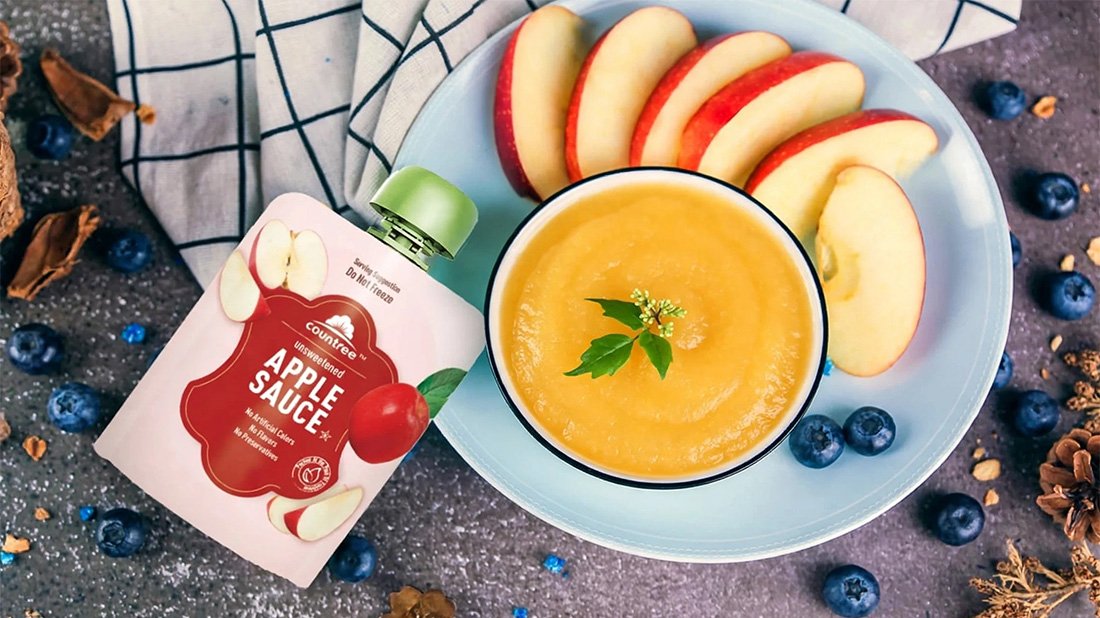
Puree Pouches (4oz and 90g)
All production runs are backed by internationally recognized food safety and social compliance certifications, including BRC A+, IFS Higher, HACCP, Kosher, BSCI, Halal, QS, and ISO.
Frequently Asked Questions
How long can apple puree last?
Commercially packed, shelf-stable apple puree in Countree’s 120g cups lasts 18 months from the date of production when stored at normal ambient temperature. The 90g pouch also carries an 18-month shelf life on its live product page.
How much time does apple puree last?
In commercial supply chains, apple puree lasts 18 months in total (nominal shelf life) for 120g ambient cups, but the actual usable time for a buyer depends on how quickly the goods move from the factory floor to your warehouse. Buyers should confirm the remaining shelf life at shipment (measured from the Bill of Lading date) and on arrival (confirmed against their distribution cycle) when booking orders.
How long will homemade apple puree last in the fridge?
Note: This applies to fresh, consumer-prepared food, not commercial B2B supply. Homemade apple puree lasts for days, not months, in a standard refrigerator. Because homemade puree is a fresh kitchen preparation rather than a commercially heat-processed, hermetically sealed product, its refrigerated lifespan cannot be compared to the 18-month ambient shelf life of commercial packaged puree.
Ready to lock in remaining shelf-life terms?
For specification sheets, custom formulation requests, or to confirm remaining shelf-life terms for your next shipment, contact our export team.
Contact sales@countreefood.net