


How to Choose the Right Canned Sweet Corn Manufacturer
Choosing a canned sweet corn manufacturer is not simply about finding the lowest quotation. For importers, distributors, retailers, food manufacturers, and private-label brands, the bigger question is whether a manufacturer can consistently deliver the right product, at the right specification, with predictable quality and supply.
A good first sample is only the beginning. The real test comes when you place repeat orders.
So, how should B2B buyers evaluate a canned sweet corn manufacturer?
This guide looks beyond price and production capacity to examine the factors that can have a real impact on your sourcing costs, product consistency, and long-term supply.
1. Start with Your Sourcing Requirements, Not the Supplier
Before comparing manufacturers, define exactly what you need.
A supplier may offer dozens of canned sweet corn formats, but that does not mean every format is suitable for your market.
Start by clarifying:
Target market and country
Retail, foodservice, or industrial application
Can size
Net weight
Drained weight
Packing medium
Packaging format
Required certifications
Expected annual volume
OEM or private-label requirements
For example, a supermarket buyer may prioritize retail-friendly can sizes, attractive packaging, and market-specific labeling, while a foodservice customer may focus more on larger formats, drained weight, and cost per serving.
The right manufacturer is therefore not simply the one with the largest product catalog. It is the one whose manufacturing capabilities match your actual purchasing requirements.
2. Verify That You Are Buying from a Real Manufacturer
The word “manufacturer” appears frequently in B2B supplier searches, but buyers should still verify what is behind the label.
A genuine canned sweet corn manufacturer should be able to explain its:
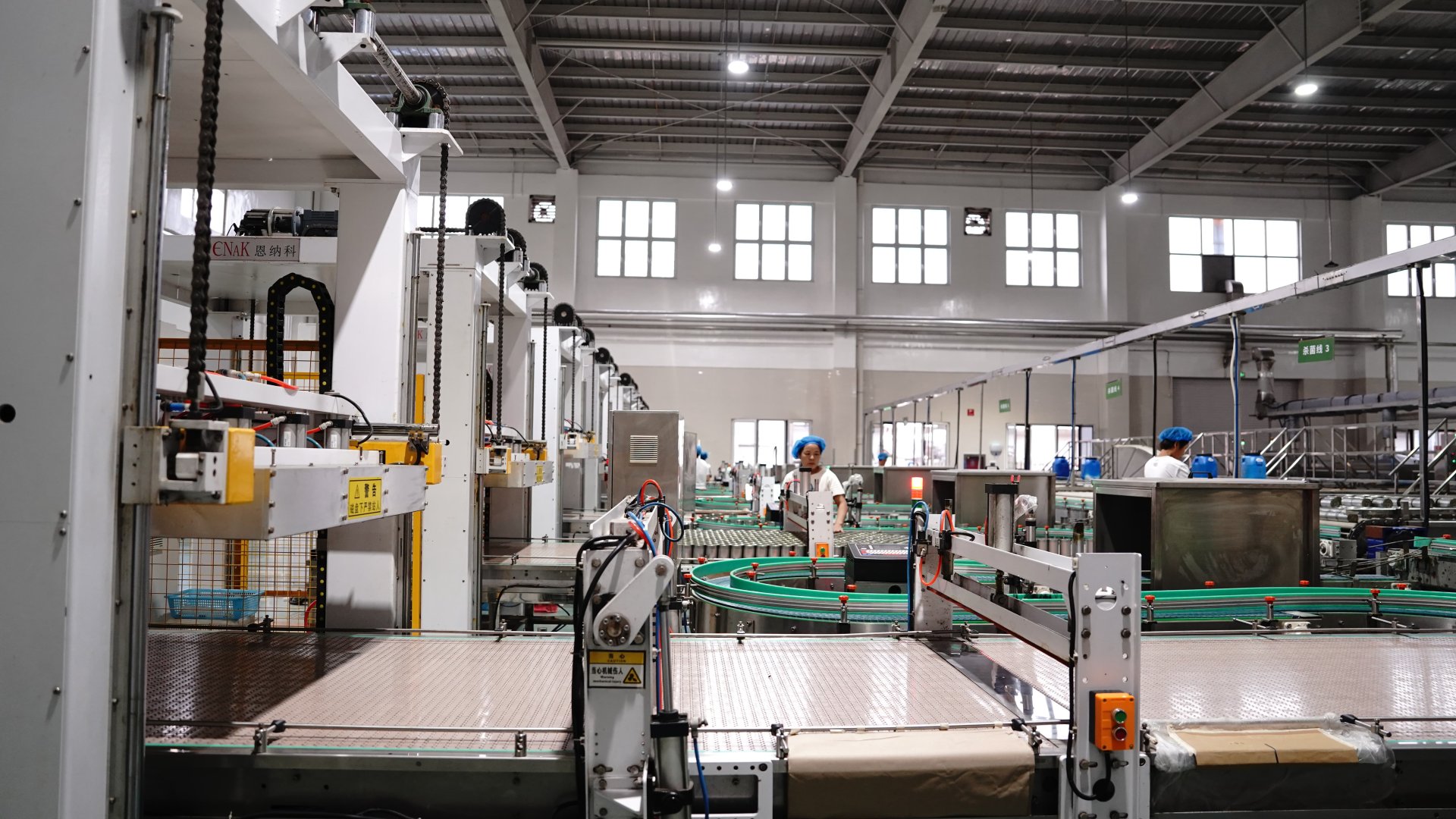
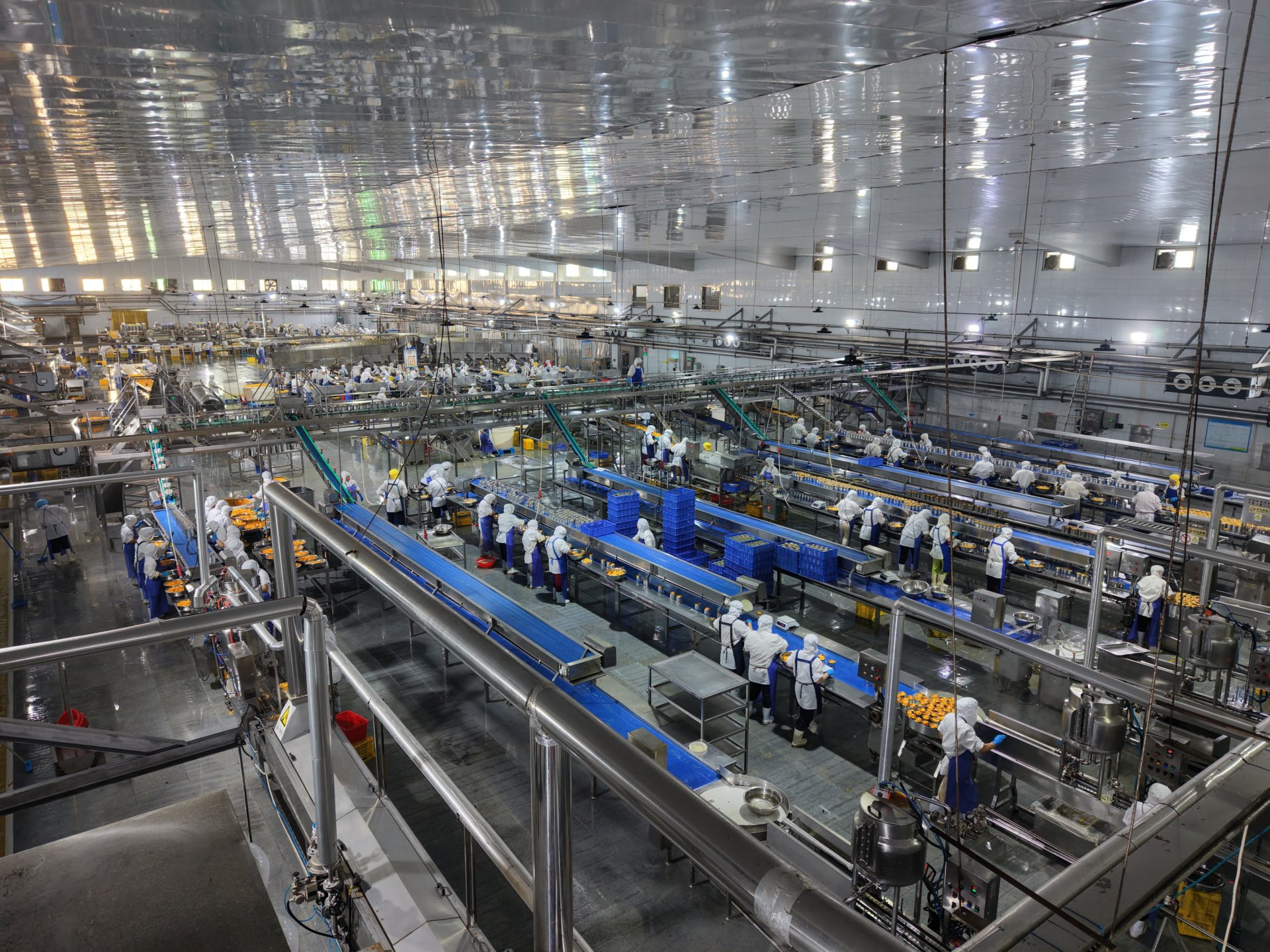
Production facilities
Processing lines
Manufacturing processes
Quality control system
Production capacity
Raw material sourcing
Factory certifications
Export capabilities
A website alone is not enough to establish manufacturing capability.
Where appropriate, buyers can request factory information, production photos or videos, certification documents, and even arrange a factory audit or virtual factory tour.
There is also a practical advantage to working directly with a manufacturer: specifications, packaging changes, quality issues, production schedules, and repeat orders can generally be discussed more directly.
3. Compare Cost per Usable Product, Not Just Price per Carton
One of the most common mistakes in canned food sourcing is comparing quotations without comparing the actual product content.
Suppose Supplier A offers a lower price per carton than Supplier B. That does not automatically mean Supplier A provides better value.
Buyers should compare:
Can size
Units per carton
Net weight
Drained weight
Packing medium
Carton configuration
Drained weight is particularly important for canned vegetables because it indicates the amount of solid product remaining after the packing liquid is removed.
This leads to a more useful purchasing question:
For this reason, buyers should compare suppliers on a like-for-like specification rather than simply choosing the lowest carton price.
4. Look for Consistency, Not Just a Good First Sample
A sample can tell you whether a manufacturer can make an acceptable product once.
It does not necessarily tell you whether the manufacturer can make the same product six months later.
For B2B buyers, consistency may matter more than an impressive first sample.
Important areas to monitor include:
Kernel size
Color
Texture
Taste
Sweetness
Salt level
Net weight
Drained weight
Packaging quality
The goal is not just to receive a good shipment. It is to receive a predictable product from one shipment to the next.
This is why buyers should ask manufacturers how they control product variation during raw material selection, processing, filling, sterilization, and finished-product inspection.
5. Evaluate Supply Reliability Beyond Production Capacity
A manufacturer may have a large production capacity, but capacity alone does not guarantee reliable supply.
Canned sweet corn depends on agricultural raw materials, which means seasonal availability and crop conditions can affect production planning.
A better question than “How many tons can you produce?” is:
Buyers should understand:
Raw material sourcing
New-crop timing
Production scheduling
Lead times
Peak-season capacity
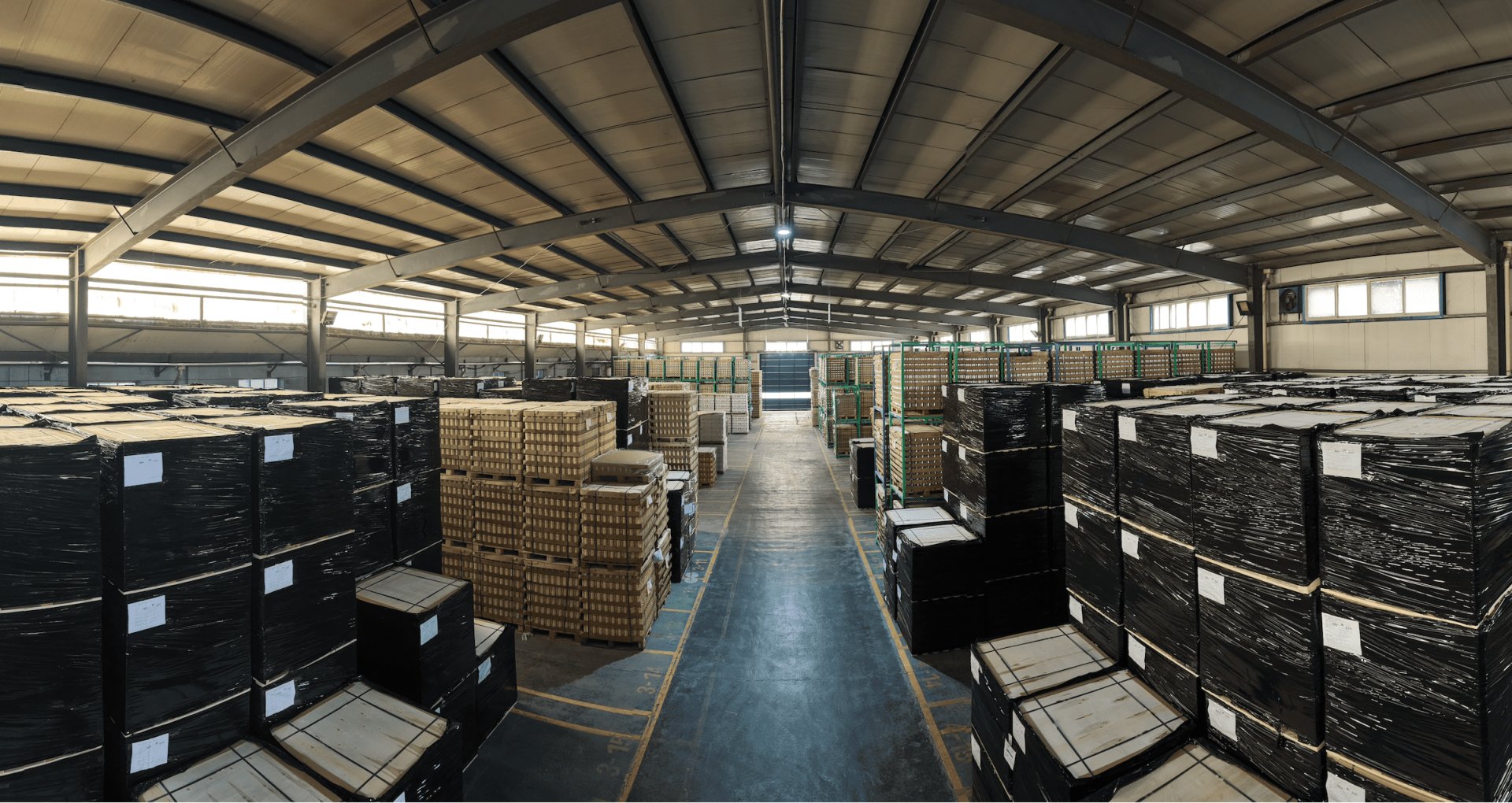
Inventory planning
Container loading schedules
Repeat-order capabilities
For buyers with regular annual demand, discussing the new-crop cycle and booking schedule in advance can also help reduce supply uncertainty.
Production capacity tells you what a factory can potentially make. Supply reliability tells you what you can actually depend on.
6. Choose a Manufacturer That Understands Your Market
A capable manufacturer should understand that the same canned sweet corn product may need to be different depending on where and how it will be sold.
Retail
Consumer-friendly can sizes
Retail-ready packaging
Market-specific labels
Shelf presentation
Promotional requirements
Foodservice
Larger formats
Functional packaging
Focus on efficiency
Cost per serving
Consistent bulk supply
Market requirements can also affect labeling, certifications, packaging, and documentation.
So when evaluating a manufacturer, don’t only ask “Can you produce canned sweet corn?” Ask: “Can you produce the specification required by my market?”
That distinction can save significant time during product development and approval.
7. Look Beyond “OEM Available”
Many suppliers advertise: OEM & Private Label Available
But the phrase itself tells you very little about the depth of their customization capabilities.
Private label is not simply putting a customer’s logo on an existing can.
A complete private-label project may involve:
Buyers should therefore ask:
Can you customize the product specification?
Can you provide different can sizes?
Can you support custom labels?
Can you review market-specific labeling requirements?
Can you provide retail-ready packaging?
Can you maintain the same specification for repeat orders?
The more of these steps a manufacturer can coordinate effectively, the easier it can be to manage a private-label project.
8. Check Export Experience and Regulatory Capability
For international buyers, manufacturing capability is only part of the equation.
The supplier also needs to understand the practical requirements of exporting food products.
These may include:
Export documentation
Product labeling
Packaging requirements
Food safety documentation
Container loading
Shipping schedules
Destination-market requirements
Rather than simply asking how many countries a supplier exports to, buyers can ask whether the manufacturer has experience with their specific market, product format, and packaging requirements.
Relevant certifications should also be checked for validity and applicability to the target market.
9. Use the First Order to Test the Manufacturer
The first order should be treated as more than a transaction. It is an opportunity to test how the supplier actually performs.
Buyers can evaluate:
Product
Does the product match the approved sample and specification?
Packaging
Are cans, labels, cartons, and pallets consistent with the agreed requirements?
Communication
Does the manufacturer communicate clearly when issues arise?
Delivery
Was production completed according to the agreed schedule?
Documentation
Are shipping and product documents accurate and complete?
These factors can reveal information that a supplier presentation or sales quotation cannot.
10. Ask Questions That Reveal Supplier Risk
Before choosing a long-term canned sweet corn manufacturer, buyers should ask questions that go beyond price.
For example:
Are you a direct manufacturer or a trading company?
Where are your production facilities located?
How do you control raw material quality?
What specifications can you produce?
What are the available can sizes?
What are the net weight and drained weight?
How do you maintain consistency between batches?
How do you manage seasonal raw material supply?
What is your typical production lead time?
Can you provide OEM and private-label services?
What certifications are available for the product?
Which markets do you currently supply?
Can you provide samples before a large order?
How do you handle quality issues or specification deviations?
The answers can help buyers identify potential supply risks before they become expensive problems.
Canned Sweet Corn Manufacturer Evaluation Checklist
| Factor | What to Evaluate |
|---|---|
| Manufacturer | Direct factory or trading company |
| Product Fit | Does the product match your market? |
| Specifications | Can size, net weight, drained weight, packing medium |
| Consistency | Ability to maintain the same quality between batches |
| Quality Control | Raw material, processing, filling, and finished-product controls |
| Certifications | Valid and market-relevant certifications |
| OEM | Product and packaging customization |
| Capacity | Production capability |
| Supply | Raw material and repeat-order reliability |
| MOQ | Minimum order quantity |
| Lead Time | Production and shipping schedule |
| Export | Experience with the target market |
| Samples | Pre-order sample and approval process |
| Communication | Response and problem-solving capability |
The First Order Tests the Product. Repeat Orders Test the Manufacturer.
This is perhaps the most important point for B2B buyers.
A sample proves that a manufacturer can make the product once.
A first order shows whether the supplier can deliver commercially.
But repeat orders reveal whether the manufacturer can consistently maintain:
Product specifications
Quality
Pricing
Production schedules
Packaging
Communication
Supply
That is why choosing a canned sweet corn manufacturer should be viewed as a long-term sourcing decision rather than a simple price comparison.
Looking for a Canned Sweet Corn Manufacturer?
If you are sourcing canned sweet corn for retail, foodservice, distribution, or private-label applications, the right manufacturer should be able to work with your specifications and market requirements.
Countree Food supplies canned fruits and vegetables for international B2B buyers and can support discussions around product specifications, packaging, OEM, and supply requirements.
Request Canned Sweet Corn Specifications
Share your target market, can size, quantity, packaging requirements, or private-label needs with our team to discuss a suitable sourcing solution.