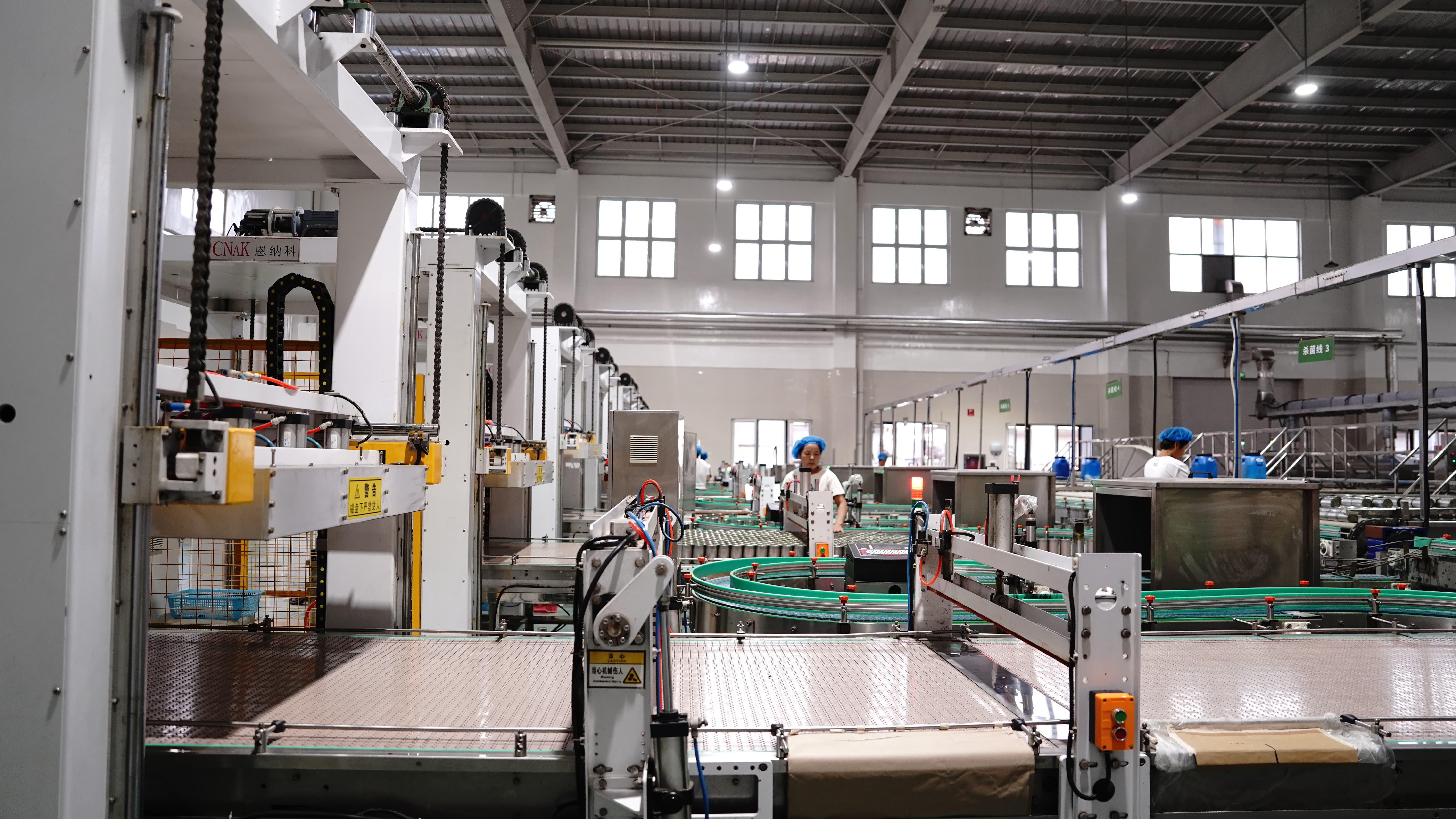


Inside a Canned Fruit Manufacturing Process: From Fresh Produce to Finished Cans
A finished can of peaches may look simple: fruit, packing medium, and a metal can. But behind that simple package is a chain of decisions that determines whether the fruit arrives on a buyer’s shelf firm or soft, uniform or inconsistent, attractive or damaged.
For B2B buyers, understanding the canned fruit manufacturing process is therefore not just about knowing how canned fruit is made. It is about understanding where product quality is created, where it can be lost, and how a manufacturer turns variable agricultural raw materials into a consistent commercial product.
From raw fruit selection to cutting, filling, thermal processing, and final inspection, every stage has a role. More importantly, the stages are connected. A problem at the beginning of the process may not become visible until the finished cans are opened.
So, what actually happens inside a canned fruit factory?
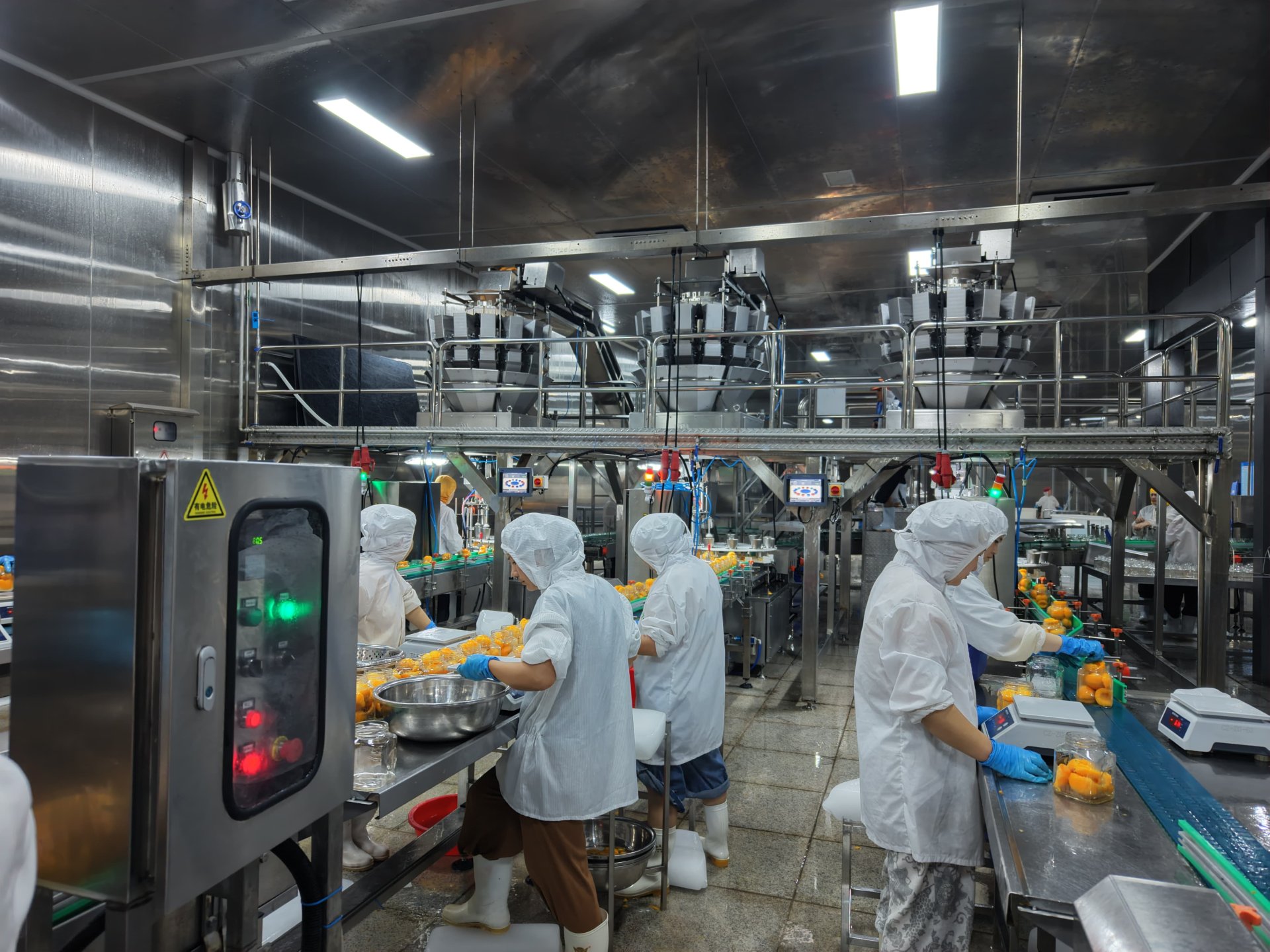
A Corner Inside Countree Food’s Shengqing Factory
The Process Starts Before the Fruit Enters the Can
The first step in canned fruit manufacturing is not filling a can. It starts with the fruit itself.
Unlike many manufactured raw materials, fresh fruit naturally varies from one harvest to another. Peaches can arrive at different maturity levels. Fruit size can change with growing conditions. Brix, firmness, color, and moisture can also vary.
This creates a fundamental challenge for canned fruit manufacturers:
How do you turn a naturally variable agricultural product into a standardized commercial product?
Raw fruit is therefore inspected before it enters production. Depending on the product, manufacturers may evaluate characteristics such as variety, maturity, size, color, firmness, appearance, and soluble solids.
But inspection alone is not enough.
A capable manufacturer needs to understand how those raw-material differences will affect the later processing stages. Fruit that is too soft, for example, may not respond to cutting and thermal processing in the same way as firmer fruit.
This is why raw-material control is one of the foundations of finished-product consistency.
For B2B buyers, the important question is not simply whether a supplier can source good fruit. It is whether the supplier can manage natural variation in the raw material without allowing that variation to become uncontrolled variation in the finished product.
Sorting and Preparation: Where Raw Material Becomes a Product
After receiving and inspection, the fruit goes through sorting and preparation.
Damaged or unsuitable fruit can be removed, while acceptable fruit is prepared according to the requirements of the final product.
The exact process depends heavily on the type of fruit.
Peaches may require peeling and pitting. Pears may require peeling and coring. Mandarins need to be peeled and separated into segments. Pineapple may require trimming and coring before cutting.
This is more than a series of mechanical operations.
At this point, the manufacturer is already making decisions about what the finished product will look and feel like.
The goal is not simply to remove the inedible parts. It is to prepare the fruit in a way that preserves as much desirable fruit quality as possible while creating a consistent format for the next stages of production.
That becomes particularly important when the product is sold under a defined commercial specification.
A buyer may not simply order “canned peaches.” They may require a specific variety, cut, size range, packing medium, net weight, drained weight, or packaging format.
The manufacturing process has to translate those specifications into repeatable production.
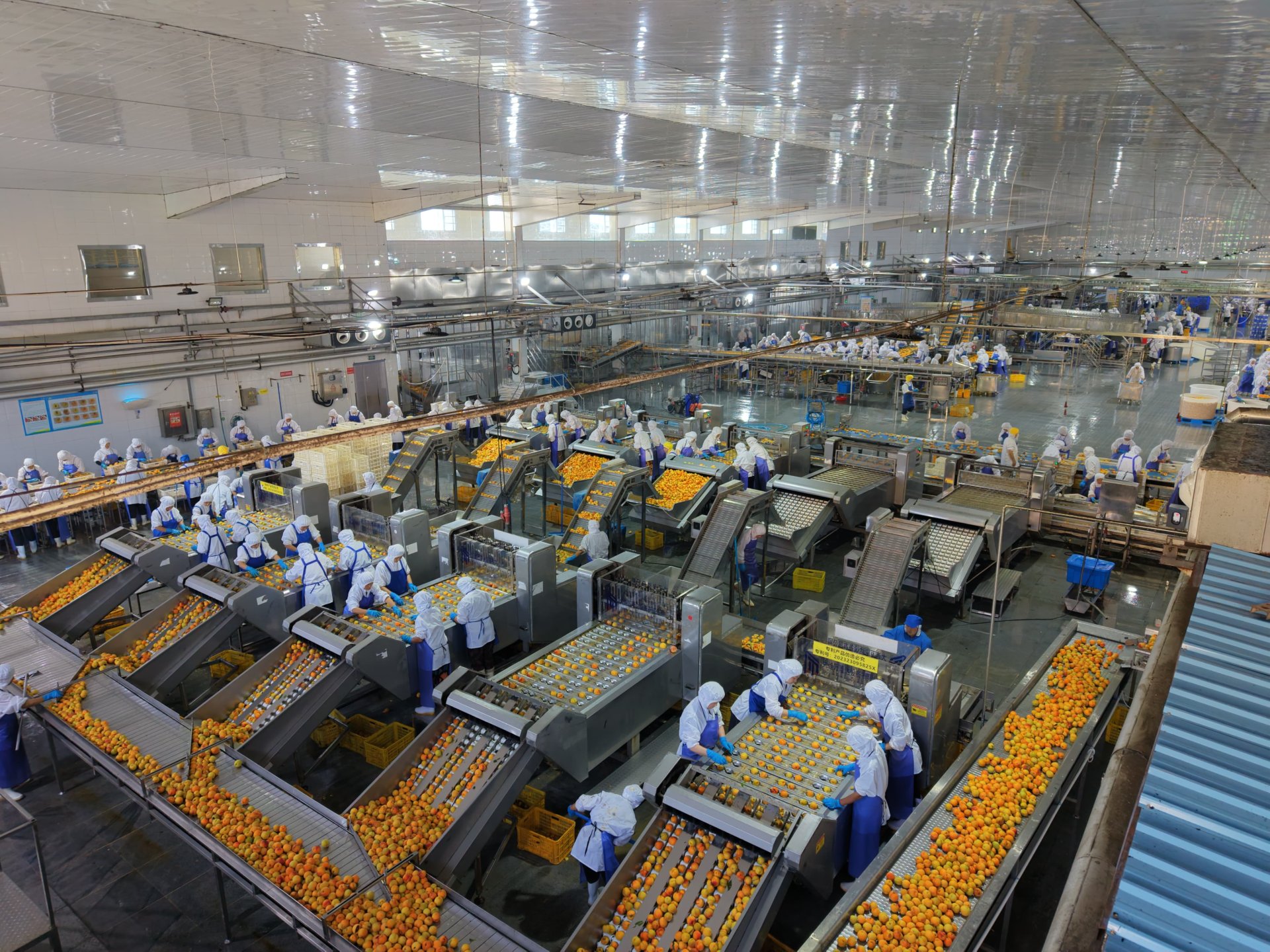
Interior view of Workshop 1 at Countree Food’s Shengqing Factory
Cutting the Fruit Is a Product Decision, Not Just a Processing Step
One of the easiest parts of canned fruit manufacturing to underestimate is cutting.
Halves, slices, chunks, and dices may look like simple variations of the same fruit. In commercial applications, however, the cut can influence how the product is used, presented, and processed further.
Peach halves, for example, preserve a more recognizable whole-fruit appearance and may be suitable for desserts, retail presentation, or applications where visual appearance matters.
Slices offer a different balance between appearance and convenience, while dices and smaller pieces can be more suitable for products such as yogurt, bakery fillings, fruit preparations, and other food-manufacturing applications.
This means the right question is not simply:
“Can the factory produce this cut?”
A more useful question is:
“Can the manufacturer produce this cut consistently for the buyer’s intended application?”
Cut size, shape, and uniformity can affect filling efficiency, appearance, portioning, and the way the fruit performs in downstream processing.
This is why product format should be considered part of product specification rather than simply a cosmetic choice.
For buyers comparing different formats, understanding the differences between halves, slices, chunks, and dices can help connect the manufacturing process with the final application.
What Goes Around the Fruit Matters as Much as the Fruit
The fruit itself is only one part of a canned fruit product.
The packing medium also influences the final product’s taste, positioning, and specifications.
Depending on the product and market, canned fruit may be packed in syrup, fruit juice, or water.
Syrup can provide a sweeter and more traditional canned-fruit profile. Juice can create a more fruit-forward profile, while water places less emphasis on sweetness from the packing medium itself.
The important point is that the packing medium is not simply a liquid added to fill the empty space in the can.
It becomes part of the finished product.
The choice can affect consumer perception, formulation, nutritional positioning, and the overall application of the product.
For B2B buyers, this means packing medium should be considered together with the fruit specification rather than treated as an afterthought.
The same peach can therefore become a different commercial product depending on whether it is packed in syrup, juice, or water.
Filling the Can: Where Specifications Become Physical
Once the fruit has been prepared, it is filled into cans together with the selected packing medium.
This is where product specifications become physical.
The manufacturer needs to control factors such as fruit quantity, liquid quantity, net weight, headspace, and overall filling consistency.
One important distinction for buyers is the difference between net weight and drained weight.
Net weight represents the total contents of the can, including the fruit and packing medium. Drained weight focuses on the solid product remaining after the packing medium is removed according to the applicable testing method.
For buyers, this distinction matters because a can that looks larger or has a higher total weight does not necessarily contain more fruit.
In other words, the number printed on the can does not tell the entire product story.
This is particularly relevant when buyers compare suppliers, pack sizes, or product specifications across different markets.
A Good Sample Is Not Enough
This is where the manufacturing process becomes especially important for B2B procurement.
A supplier may provide an excellent sample. The fruit may have the right color, texture, size, and taste.
But one good sample does not necessarily demonstrate manufacturing consistency.
The real test comes when the same product is produced again.
Can the manufacturer reproduce the same specifications during the next production run?
Can the product remain consistent across different harvest periods?
Can the supplier maintain the agreed cut, weight, texture, and packing medium when the order volume increases?
For B2B buyers, this distinction is critical.
A good batch demonstrates capability. Repeatable batches demonstrate manufacturing control.
This is one reason why evaluating a canned fruit manufacturer should go beyond product samples.
The manufacturing system behind the sample is just as important as the sample itself.
Seaming and Thermal Processing: Balancing Stability and Product Quality
After filling, the cans are sealed and undergo controlled thermal processing.
The purpose of thermal processing is to achieve the required level of commercial stability and shelf life under controlled conditions.
But there is an important balance here.
Thermal processing is necessary for product safety and stability, yet processing conditions can also influence characteristics such as texture, color, and flavor.
This is particularly important for fruit because fruit tissue naturally changes during heating.
Too little processing may not achieve the required stability. Excessive processing may negatively affect product quality.
Therefore, the objective is not simply to apply “more heat” or “more processing.”
The objective is to establish a controlled process appropriate for the specific product, packaging format, and processing conditions.
This is another reason why canned fruit manufacturing cannot be reduced to a universal recipe.
Different fruits, formulations, can sizes, and production conditions require different process controls.
Quality Control Does Not Begin at the End
After thermal processing and cooling, finished cans can undergo further inspection and quality checks.
These may include checks related to:
Can appearance
Seal integrity
Net weight
Drained weight
Product appearance
Color
Texture
Packing medium
Brix or formulation
Microbiological requirements, where applicable
However, quality control should not be understood as something that happens only after production.
If a problem is discovered only after the cans have been completed, the manufacturer may already have a much larger problem to manage.
Effective quality control is therefore built into the manufacturing process.
Raw-material inspection, process controls, weight checks, filling controls, sealing, thermal processing, and final inspection all contribute to the same objective:
making sure the finished product matches the specification.
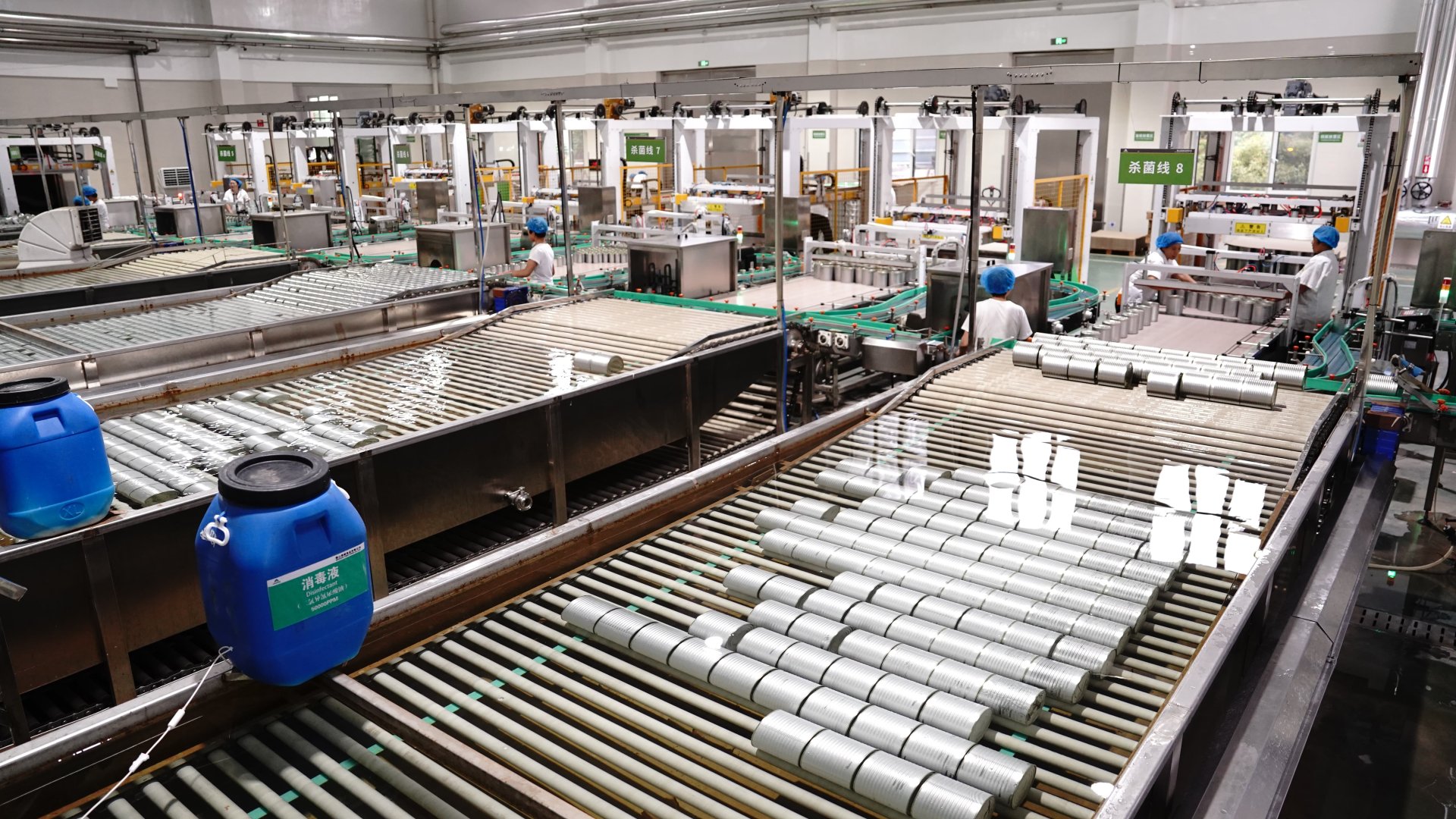
A corner of the quality control line at Countree Food’s Shengqing Factory
The Can Is Sealed, but the Manufacturing Process Is Not Over
Once the cans have passed production and quality checks, they still need to be prepared for the supply chain.
Labels, product coding, cartons, case configurations, palletizing, and container loading all become part of the final delivery process.
For domestic products, these requirements may already be complex.
For export-oriented canned fruit, the requirements can become even more important because the finished product may travel through multiple stages of transportation and storage before reaching the final customer.
The product therefore needs to be manufactured not only for the moment it leaves the production line, but for the journey that follows.
This is particularly relevant for private-label and international buyers, who may have specific requirements for:
Can sizes
Label specifications
Carton configurations
Pallet patterns
Shipping marks
Product coding
Destination-market requirements
A manufacturer that understands these requirements can connect production with the realities of international distribution.
What the Manufacturing Process Tells a B2B Buyer
Looking inside a canned fruit factory gives buyers a useful way to evaluate suppliers.
Instead of asking only whether a manufacturer carries a particular product, buyers can look at how the manufacturer manages the entire process.
1. Can the manufacturer control raw-material variation?
Fresh fruit is not identical throughout an entire harvest.
A reliable manufacturing system needs to account for changes in maturity, size, firmness, Brix, and other characteristics without allowing those changes to create unacceptable differences in the finished product.
2. Can specifications be reproduced at commercial scale?
A manufacturer may be able to produce a particular specification once.
The more important question is whether the same specification can be reproduced across production runs.
For B2B buyers, this means looking beyond the product name and discussing details such as:
Fruit variety
Cut
Size
Packing medium
Net weight
Drained weight
Brix
Packaging requirements
3. Can the manufacturer maintain consistency across repeat orders?
The first shipment is only one point in the relationship.
For importers, distributors, retailers, and food manufacturers, supply reliability depends on whether the agreed product can be reproduced month after month and season after season.
This is ultimately what turns a manufacturer into a dependable supply partner.
From Fresh Produce to Finished Cans: The Real Manufacturing Challenge
The canned fruit manufacturing process may appear straightforward when reduced to a list:
Fresh fruit → sorting → preparation → cutting → filling → sealing → thermal processing → inspection → packing.
But the real challenge lies between those steps.
Fresh fruit varies. Specifications are precise. Processing affects texture and appearance. Packaging affects logistics. And B2B buyers expect the same product to be delivered repeatedly.
That is why quality in canned fruit is not created at a single point on the production line.
It is built through a controlled chain of decisions—from the moment fresh fruit enters the factory to the moment finished cans are loaded for shipment.
For buyers, understanding that chain provides a better way to evaluate a canned fruit manufacturer: not simply by what the finished can looks like, but by how consistently the manufacturer can produce it.
Looking for a Canned Fruit Manufacturing Partner?
Whether you are sourcing canned peaches, pears, mandarins, fruit cocktail, or other canned fruit products, the right manufacturing partner needs to combine raw-material control, processing capability, quality management, and consistent production.
At Countree Food, we work with international buyers on product specifications, packaging formats, and supply requirements for different markets and applications.
Need product specifications, samples, or a quotation?